Basic Profile
Caraquet is a farmed Eastern from Chaleur Bay, New Brunswick — grown in the coldest commercial Eastern oyster waters in Atlantic Canada, where the brine hits hard, the mineral follows without apology, and the whole thing rewards the attention it rarely receives outside the Maritime provinces.
Chaleur Bay and Caraquet
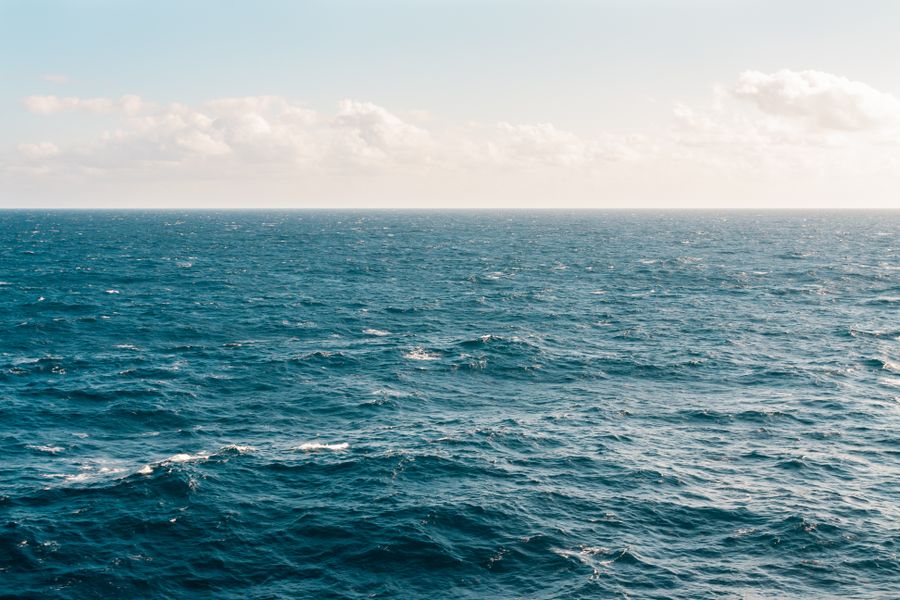
Chaleur Bay is a 145km inlet on the border of New Brunswick and Quebec, open to the Gulf of St. Lawrence at its eastern end. The bay runs east-west, sheltered on both sides by the Appalachian foothills of the Gaspé Peninsula to the north and the New Brunswick uplands to the south. Water temperatures are cold: among the lowest for commercial Eastern oyster production in North America, dropping to near-freezing in winter and recovering slowly through a short summer. Ice cover across most of the bay in January and February is normal.
The town of Caraquet sits on the New Brunswick south shore near the bay's entrance. It has been an Acadian fishing community since the eighteenth century, and shellfish: particularly oysters, have been central to the local economy for as long as it has existed. The cold, clean bay water and the Acadian fishing tradition combine to produce an oyster that is less marketed internationally than PEI varieties but not less in quality.

Flavor Breakdown
Chaleur Bay's extreme seasonal temperature variation — near-freezing winters and brief warm summers — produces C. virginica with exceptional glycogen accumulation cycles. The very cold winter arrests metabolic activity at high glycogen levels, which are preserved through the cold months and produce the sweetness that underlies the dominant brine in peak autumn and winter condition.1
Texture
Cold-water growing produces firm, well-structured flesh: the Caraquet has good chew resistance and cohesive meat that delivers its flavor in two to three bites. Flesh fill is consistent and generous for the size grade. The cold temperature of the liquor is palpable and emphasizes the clean, mineral character of the profile.
Should You Add Lemon?
The brine is assertive enough to carry lemon. The mineral finish is more apparent without it. Try plain first.
Pairing Guide
The mineral backbone and restrained acidity of Premier Cru Chablis match the Caraquet's clean mineral-brine profile without softening or overriding it.
The lean, saline character of a good Muscadet is a natural pairing for high-brine Easterns from cold water. The autolytic complexity adds texture to a pairing that would otherwise be spare.
The regional pairing: a pale, lightly hopped wheat beer from one of the growing number of New Brunswick craft breweries. The light carbonation and restrained bitterness complement the brine without competing with the mineral finish.
| Optimal | Plain; or a light red wine vinegar mignonette |
| Acceptable | Light lemon; horseradish on the side |
| Avoid | Cocktail sauce; heavy hot sauce |
Who Is This For?
- High-brine, mineral Eastern enthusiasts
- Those who want PEI-quality in a less marketed package
- Chablis and Muscadet drinkers
- Atlantic Canadian food culture enthusiasts
- Anyone building a vocabulary for Canadian oyster terroir
- Sweet and creamy profile seekers
- Those who found Wellfleet too saline
- Anyone outside Atlantic Canada — distribution is limited
History & Lore
Acadian heritage: The Caraquet region is the heartland of Acadian culture in Canada — French-speaking communities descended from the original French settlers of Acadie, who survived the 1755 Deportation and returned to New Brunswick. Fishing and shellfish harvesting have been central to Acadian subsistence and commerce since the seventeenth century, and oysters from Chaleur Bay appear in historical records of the early colonial period.2
Festival du Homard et des Fruits de Mer: Caraquet hosts an annual lobster and seafood festival that has run for over fifty years — one of the oldest seafood festivals in Atlantic Canada, drawing visitors from across the Maritime provinces and Quebec. The festival's existence reflects the town's identity as a seafood community, though it has historically been more focused on lobster than oysters specifically.3
- Mallet, A. L., et al. (1987). Growth and survival of oysters in different water masses of the Gulf of St. Lawrence. Aquaculture, 60(3–4), 201–214.
- Basque, M. (2013). Histoire de l'Acadie. Septentrion.
- Festival du Homard de Shippagan. (2023). Festival history. https://www.festivalduhomard.ca