Basic Profile
Coffin Bay is a Pacific oyster grown in a remote South Australian bay at the western tip of the Eyre Peninsula — cold, clean Southern Ocean water producing high brine with a sweet-creamy follow-through that has made it the most internationally recognized Australian oyster name.
The Eyre Peninsula
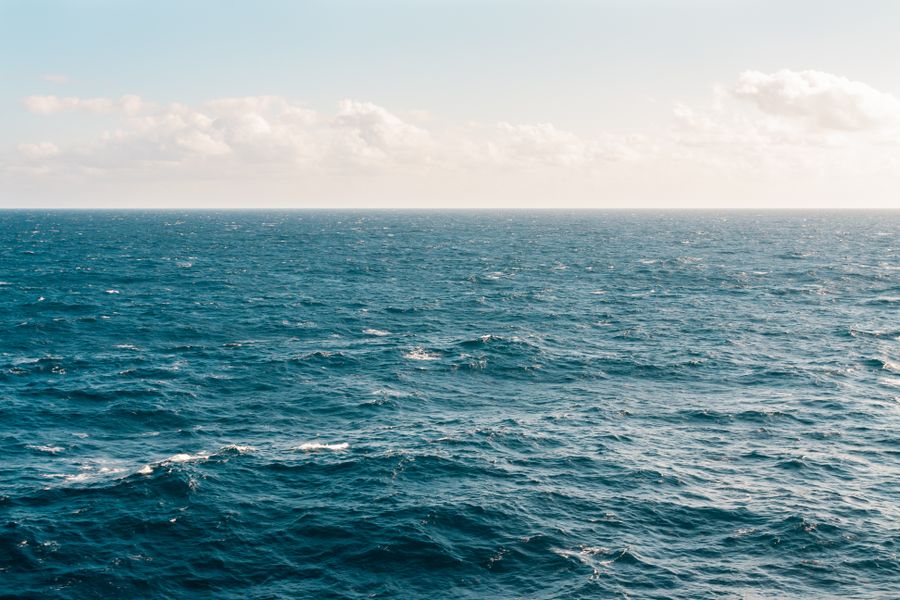
The Eyre Peninsula extends south-southwest into the Great Australian Bight: arid, sparsely populated, limestone plateau flanked by cold deep ocean on three sides. Coffin Bay sits at the southwestern tip, a drowned river valley opening directly to the Southern Ocean. The ocean it faces is among the least industrially impacted in the world: the next landmass to the south is Antarctica.
Water quality in Coffin Bay has been assessed by Australia's CSIRO as among the cleanest oyster growing water in the world. Salinity is high: reflecting the open Southern Ocean source water, and phytoplankton productivity, while seasonal, supports exceptional oyster growth quality. The surrounding Eyre Peninsula is primarily low-intensity agriculture and National Park; there is minimal anthropogenic runoff affecting the bay's water quality.

Flavor Breakdown
Coffin Bay's Southern Ocean-influenced water carries nutrient profiles typical of subantarctic upwelling — high nitrate and phosphate concentrations that support dense, diverse phytoplankton communities despite the cold temperature. CSIRO water quality assessments consistently show trace metal and contaminant levels below detection limits, producing oysters whose flavor reflects only the intrinsic qualities of water, species, and site.1
Texture
Coffin Bay oysters are consistently plump and well-filled. The firm flesh has good structural integrity: a cold-water characteristic, without the extreme density of, say, an Akkeshi or a Limfjord. Liquor is abundant and notably sweet-tasting on its own. The overall impression is one of the brine carrying nothing extra — no estuarine complexity, no enclosed-system character, just cold ocean and the sweetness that the oyster built from it.
Should You Add Lemon?
The profile is clean enough that lemon doesn't destroy it the way it would a more delicate oyster. The sweet-mineral finish is more apparent without acid, but the oyster tolerates a light squeeze without major loss.
Pairing Guide
The regional pairing: Clare Valley Riesling from the peninsula's hinterland carries lime, mineral, and petrol notes at maturity that complement the oyster's brine and mineral finish without competing with the sweetness. Grosset, Kilikanoon, and Jim Barry make excellent examples.
The Chardonnay-driven sparkling wines of the Adelaide Hills or Tasmania carry citrus and mineral character that mirrors the Coffin Bay's own clean profile. The fine bubbles and bright acidity refresh the palate cleanly between the sweet, cold bites.
The international pairing that works as well here as with any quality Pacific oyster. The chalk minerality and restrained acidity of a good Premier Cru Chablis extends the Coffin Bay's mineral close without interfering with the sweetness.
| Optimal | Plain, or a classic mignonette — the water quality means there is nothing to mask |
| Acceptable | Light lemon; yuzu-based mignonette; Tabasco in very small quantities |
| Avoid | Cocktail sauce; heavy condiments that compromise the purity that makes this oyster worth eating |
Who Is This For?
- Anyone in Australia seeking the country's benchmark Pacific
- Clean, pure flavor profile enthusiasts
- Australian Riesling drinkers
- Those interested in how pristine water quality affects flavor
- International oyster tasters seeking an Australian reference point
- Those outside Australia — export volumes are limited
- Those seeking complex aromatic depth rather than pure clean flavor
- Sydney Rock Oyster fans who prefer the SRO's characteristic complexity
History & Lore
Pacific oyster introduction to South Australia: Crassostrea gigas was introduced to South Australian waters from Japan in the 1970s as a commercial aquaculture species following the collapse of native flat oyster (Ostrea angasi) populations. Coffin Bay was identified as a premium growing site within the first decade of Pacific oyster aquaculture in the region, due to its water quality and the influence of Southern Ocean source water.2
"Coffin Bay King" product: Some Coffin Bay producers offer an extra-large, premium format oyster marketed as the "Coffin Bay King" — individual oysters grown to extreme size (sometimes over 1kg in shell) over 6+ years. These are a spectacle product rather than an optimal eating experience, though they have generated significant international media coverage for Australian oyster culture and placed the Coffin Bay name in front of audiences who would not otherwise encounter it.3
QX disease threat: QX disease — caused by the protozoan Marteilia sydneyi — devastated Sydney Rock Oyster production in eastern Australia from the 1990s and has created a structural incentive for Pacific oyster aquaculture in South Australia. Coffin Bay's distance from QX-affected eastern Australian waters and its cooler temperatures have so far kept the bay free of the disease.2
- CSIRO Marine and Atmospheric Research. (2018). Water quality assessment, Spencer Gulf and Eyre Peninsula. CSIRO Australia.
- Nell, J. A. (2002). The Australian oyster industry. World Aquaculture, 33(3), 8–10.
- Coffin Bay Oysters. (2023). Our oysters. https://www.coffinbayoysters.com.au