Basic Profile
Crassostrea belcheri, the white scar oyster, is Thailand's main cultured oyster. Oyster farming began in Chonburi, Rayong and Chanthaburi provinces and spread south, and by 1986 Surat Thani was the leading area.1
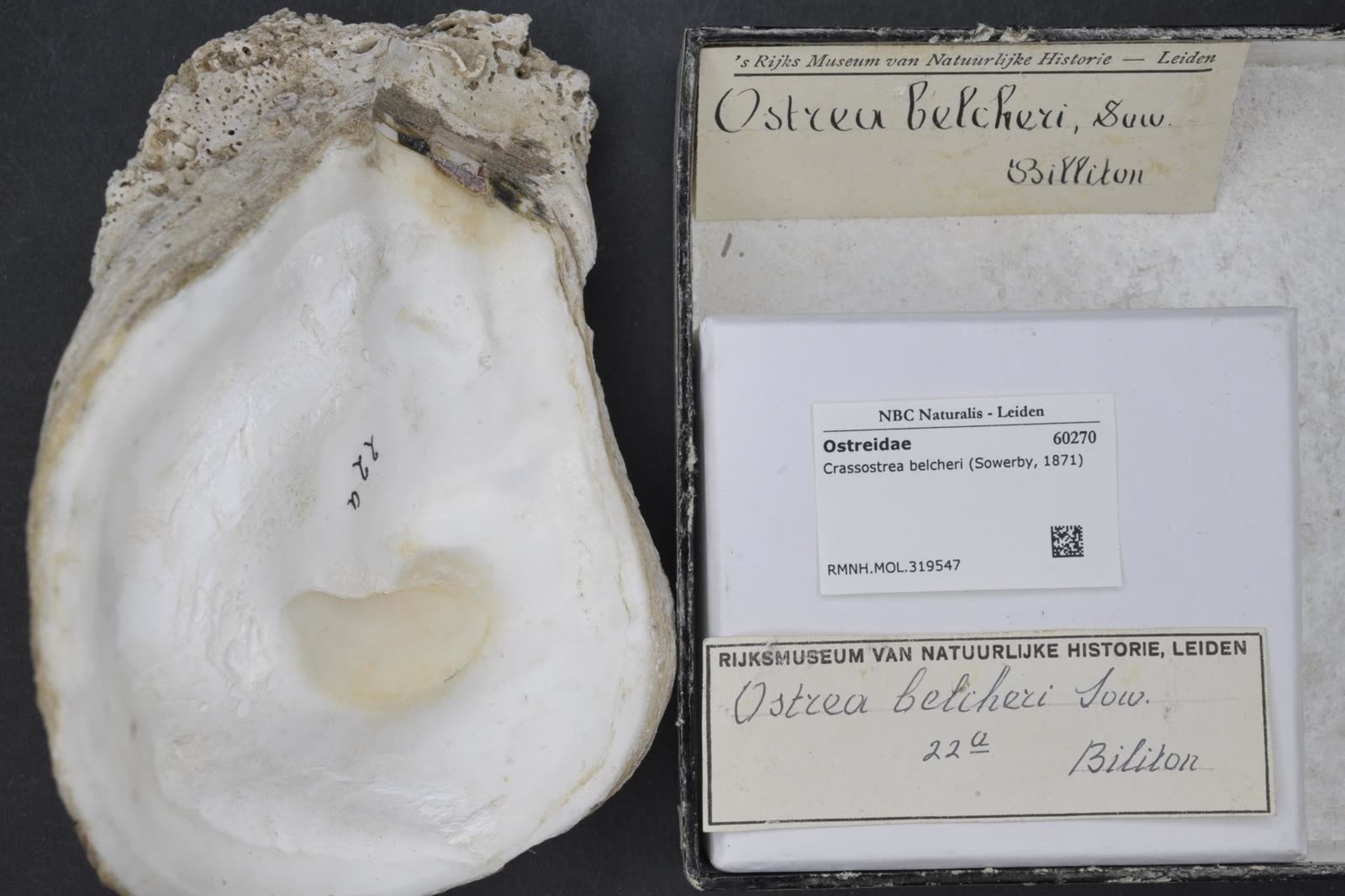

How It Is Grown
Farmers use three methods: bottom culture on natural rocks piled in groups of five to ten, trays on muddy ground, and poles or pipes with young oysters fixed on with quick-setting cement. The oysters take two to three years to reach market size.1 In Ban Don (Bandon) Bay the oysters are grown extensively on the bottom, enough for researchers to study the effect on the bay's seabed life.2
Flavor Breakdown
What Makes White Scar Oyster Unique
The white scar oyster is farmed in a way you won't see in Europe or North America: juveniles cemented one by one onto poles, or grown on piles of rock, in warm Gulf of Thailand estuaries.1
Should You Add Lemon?
Lime and chili, the Thai way.
Pairing Guide
For heat and spice.
If the condiments are hot.
| Optimal | Seafood sauce with lime and chili |
| Acceptable | Fried shallots |
| Avoid | Nothing |
Who Is This For?
- Travelers in southern Thailand
- Anyone curious about tropical oysters
- Anyone who only eats raw oysters from certified waters
- FAO. "Regional Seafarming Resources Atlas": oyster culture in Thailand. fao.org
- Kritsanapuntu, S. & Chaitanawisuti, N. (2018). Effects of extensive bottom cultivation of tropical oyster Crassostrea belcheri on benthic invertebrate community structure in Ban Don Bay, Suratthani Province, Southern Thailand. Aquaculture International 26: 433–449. doi.org/10.1007/s10499-017-0227-x