Basic Profile
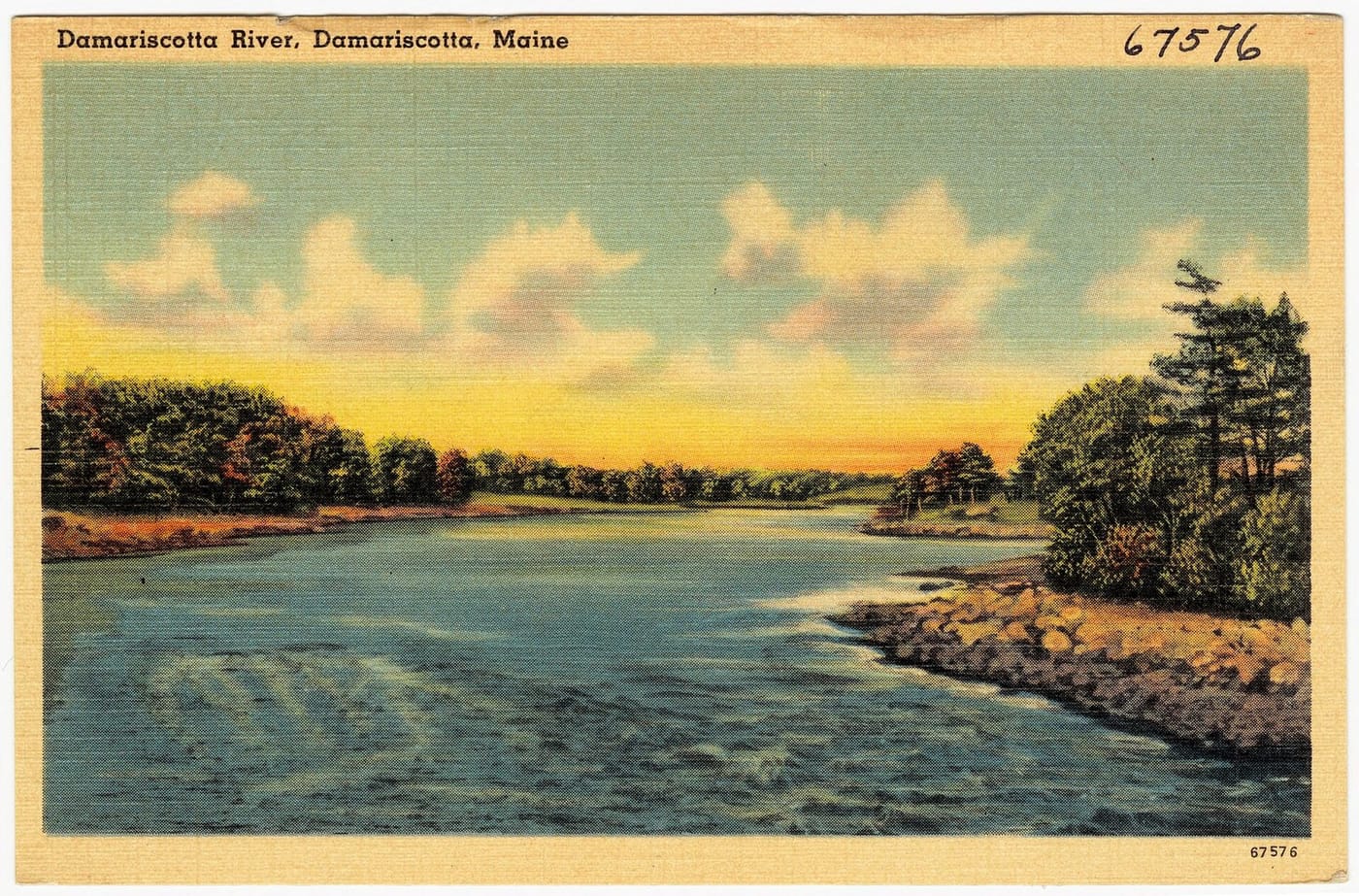
The Damariscotta River runs south from Damariscotta and Newcastle to the Gulf of Maine. Its growers' network lists eight farms on the river, from a hatchery founded in 1985 to bottom-planted oysters harvested by divers.1 People have eaten oysters here for a very long time: the Whaleback Shell Midden on its bank was built between 2,200 and 1,000 years ago.2

The Farms
Methods differ from farm to farm, which is why Damariscotta oysters vary. Mook Sea Farm, founded in 1985, raises its oysters from larvae in its own hatchery and grows them in surface cages. Pemaquid Oyster Company, founded in 1986, bottom-plants its oysters on 18 acres of high-current, hard-bottom leases. Glidden Point bottom-plants and harvests only after four years, partly by divers. Dodge Cove Marine Farm, described as Maine's oldest oyster farm, finishes its oysters on the river bottom.1 Four of the river's oysters have their own profiles: Glidden Point, Pemaquid, Mookie Blues and Dodge Cove.
How the River Became Oyster Country
Maine's oysters had declined long before the modern farms. In the 1970s University of Maine researcher Herb Hidu brought hatchery technology to the Darling Marine Center on the Damariscotta and trained Maine's first oyster farmers; in the 1990s the focus turned to breeding native Eastern oysters for Maine's cold water.3 The river's history and how to visit are in the Damariscotta River travel guide.
Flavor Breakdown
What Makes Damariscotta River Unique
Within a few miles of each other on this river you'll find a hatchery-backed surface-cage farm, bottom-planted leases in fast current, and a farm that waits four years and sends divers down.1 Add a shell midden on the bank that people built between 2,200 and 1,000 years ago,2 and the University of Maine hatchery on the river where Maine's first oyster farmers were trained,3 and the Damariscotta holds the whole history of eating and farming oysters in Maine.
Should You Add Lemon?
Keep it plain when comparing farms; lemon hides the differences you ordered them for.
Pairing Guide
Neutral enough not to favor one farm over another.
A local pour, sharp enough for the saltier bottom-planted oysters.
| Optimal | Plain |
| Acceptable | Mignonette |
| Avoid | Cocktail sauce, especially in a side-by-side |
Who Is This For?
- Anyone who wants to compare farms side by side
- Visitors to Damariscotta and Newcastle
- Diners who want one fixed flavor under one name
- Damariscotta River Oysters (growers' network). Farm pages. oystersofthedamariscotta.com
- Maine Bureau of Parks and Lands. "Whaleback Shell Midden State Historic Site." maine.gov
- Maine Sea Grant (2017). Maine Oyster Trail map and guide. seagrant.umaine.edu (PDF)