Basic Profile
In January 2014 Grand Isle opened a 25-acre marine enterprise zone for oyster farming, the first in Louisiana, laid out for eight two-acre farms. The plan had begun in 2004 and was set back by Hurricane Katrina. Louisiana Sea Grant's oyster specialist John Supan and the Grand Isle Port Commission were behind it, and Jules Melancon, a fourth-generation oysterman, was among the first to farm there.1
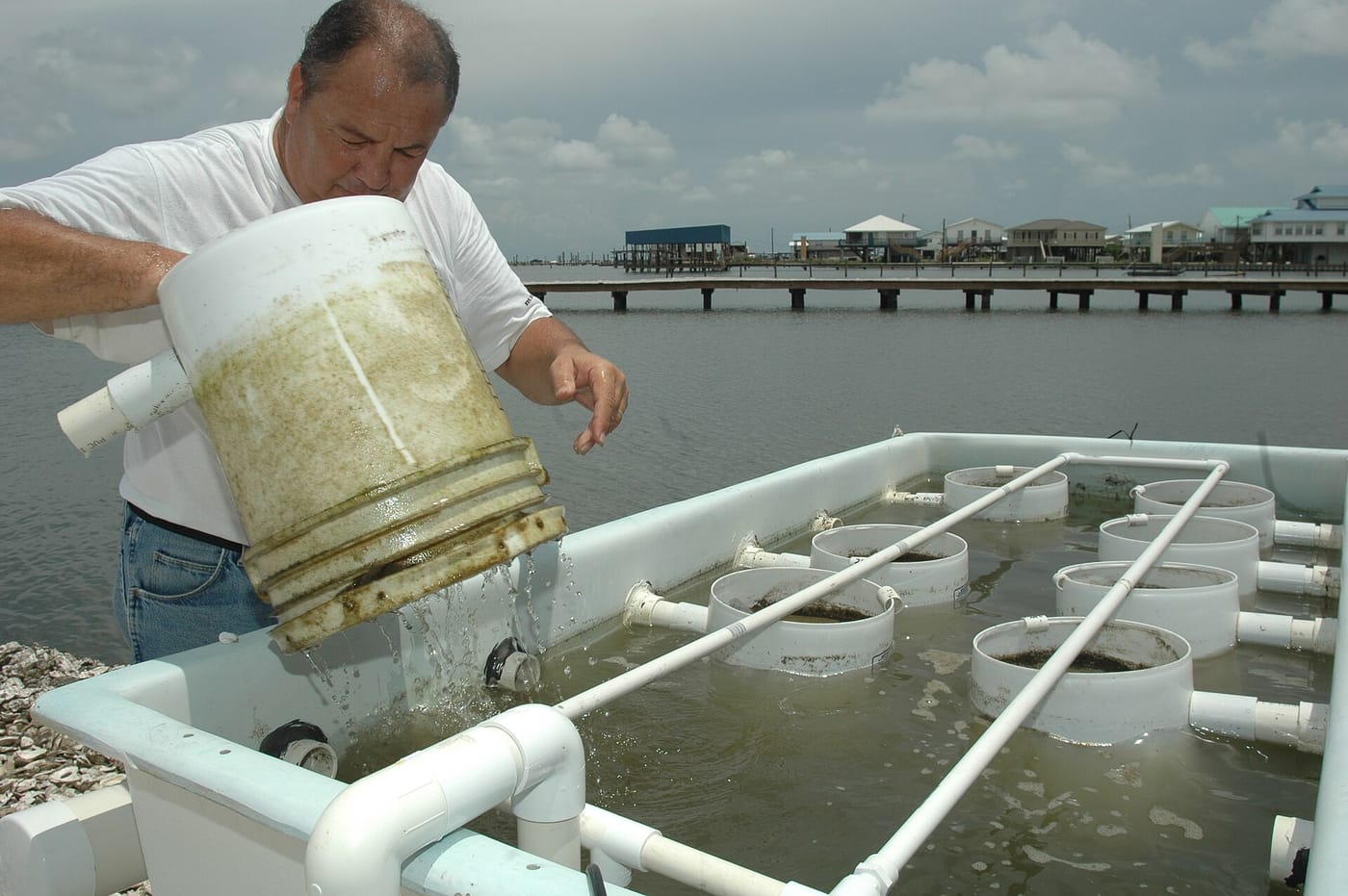

Why Lift Oysters Off the Bottom
Louisiana's oysters have always been grown on the bay floor and dredged. Of oysters planted that way, only about 35 percent are harvested. Raised in wire cages off the bottom, they are picked by hand and mature in about half the time.1
Grand Isle Jewels
Hurricane Ida came through in 2021. In April 2025 eight growers launched Grand Isle Jewels, with $140,000 from Louisiana Economic Development, as the state's first regional brand for off-bottom oysters. The oysters are sorted, tumbled and picked for size, and sell for about a dollar each instead of by the sack. Seed arrives in July, and in grower Albert Besson's words a fast one "can go to market around Thanksgiving". Nathan Herring alone brought 180,000 to market in 2024.2
The traditional fishery around them is described in the Barataria Bay profile.
Flavor Breakdown
What Makes Grand Isle Unique
Louisiana's oysters have nearly all been grown on the bottom. This is its first district, and first shared name, for oysters grown the other way.12
Should You Add Lemon?
Low in salt and rich, so acid or hot sauce helps.
Pairing Guide
Fruit and weight for a sweet, savory oyster.
What New Orleans drinks with a dozen.
| Optimal | Lemon and hot sauce |
| Acceptable | Cocktail sauce with horseradish |
| Avoid | Nothing is off the table in Louisiana |
Who Is This For?
- People who like sweet, savory, low-salt oysters
- Skeptics of Gulf oysters on the half shell
- Brine hunters
- Evans, M. (29 January 2014). "Off-Bottom Oyster Farming Launched in Grand Isle Waters." Gulf Seafood News. gulfseafoodnews.com
- KPEL 96.5 (2025). "Floating Oyster Cages Could Save $2.4 Billion Louisiana Industry." kpel965.com