Basic Profile
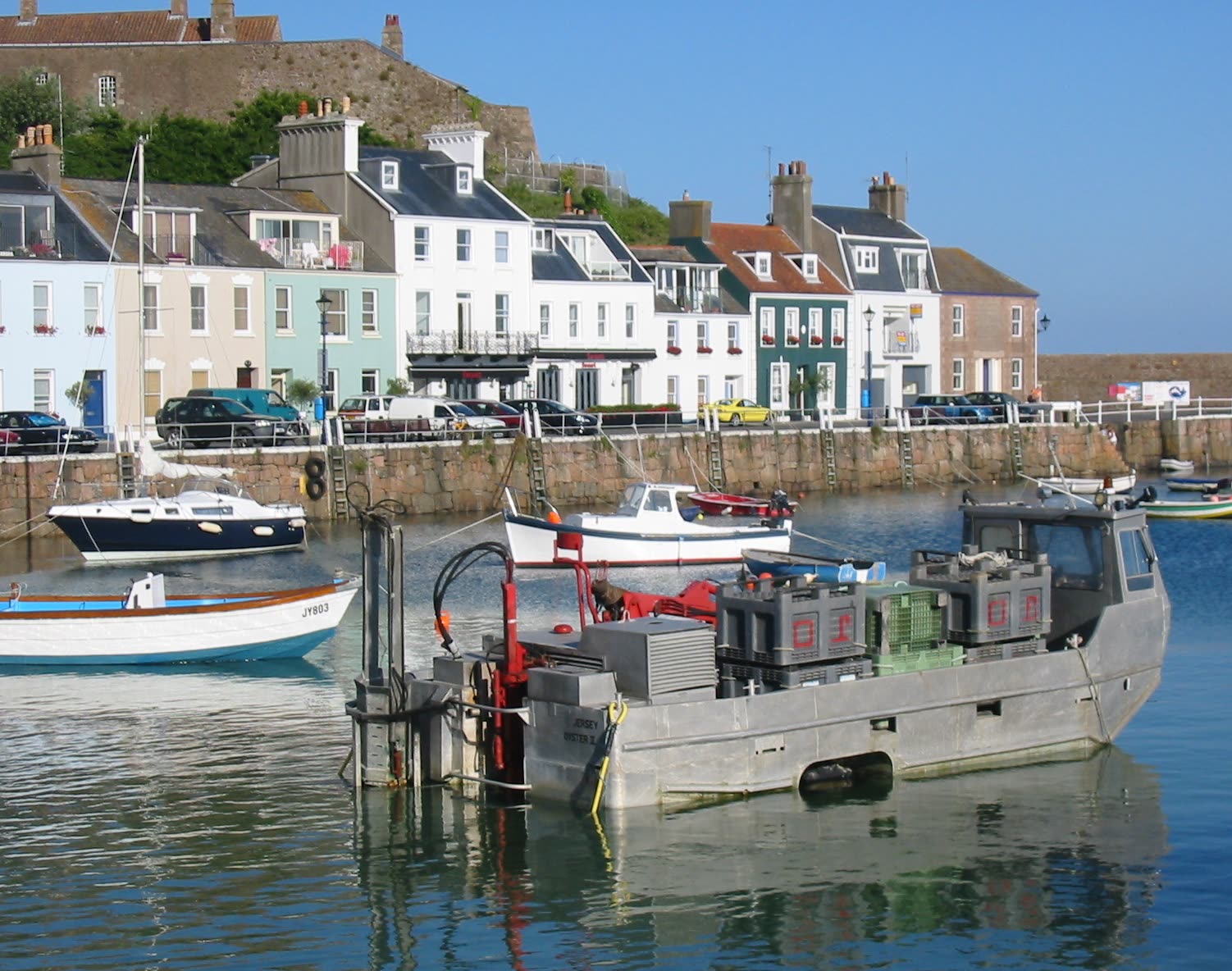
Jersey, the largest of the Channel Islands, sits in the Gulf of Saint-Malo; its growers describe its tidal range as the third largest in the world. On the island's east coast, below Mont Orgueil Castle and the harbor of Gorey, the Royal Bay of Grouville has been an oyster ground for centuries. Its oysters once crossed to England by the billion. Today it grows Pacific oysters, mostly for France and the UK.12

The Great Oyster Boom
Islanders' rights to the beds were settled early: in 1606 the Royal Court of Jersey rejected the Governor's claim to the Gorey oyster beds and ruled that every islander could work them. The boom came in the nineteenth century. Between 1810 and 1871 Jersey exported around two billion oysters to England. By 1822 more than 300 vessels and nearly 2,000 seamen worked the beds, with over 1,000 women packing and sorting on shore, and £16,000 went into Gorey's pier and harbor in the 1820s.1
The collapse was just as fast. In 1856 the fleet had 256 boats and exported 180,000 tubs of oysters. Five years later exports had fallen to 9,800 tubs, and by 1871 only six boats were left.1
Farming the Tides
Modern Jersey oysters are farmed Pacific oysters. The island produces around 1,000 metric tons a year in Grouville Bay.1 The Jersey Oyster Company farms about 35 hectares and places its oysters where they are exposed for at least half the day at low tide, to "harden" them off. Between 50 and 60 million oysters pass through its pack-house in a year.2
Flavor Breakdown
What Makes Jersey Unique
Grouville Bay's oysters are placed where the tide leaves them dry for at least half of every day, to "harden" them.2 The same bay once sent some two billion oysters to England between 1810 and 1871, before the beds collapsed.1
Should You Add Lemon?
A squeeze suits a salty oyster; try one plain first.
Pairing Guide
The Loire white for Channel oysters.
Crisp enough for the salt.
| Optimal | Mignonette |
| Acceptable | Lemon |
| Avoid | Heavy cocktail sauce |
Who Is This For?
- Visitors to Gorey and Grouville
- Fans of firm, salty oysters
- Anyone who wants a soft, sweet oyster
- Jersey Heritage. "Oyster fishing and farming industry." jerseyheritage.org
- Jersey Oyster Company. "Jersey & Oysters." jerseyoyster.com