Basic Profile
Moreton Bay, the large sheltered bay off Brisbane, is Quandamooka country. The native Sydney rock oyster was once a dietary staple of the Quandamooka people and south-east Queensland's largest and most important fishery.1 Its story runs from shell middens thousands of years old to a colonial boom and a long decline.

A Living Tradition
In the estuarine middens of south-east Queensland, oysters make up at least 20% and as much as 95% of the shellfish by weight. The Quandamooka people of Moreton Bay still extend the oyster season using techniques they describe as handed down from their ancestors: they build reefs from old oyster shell on high points of the shallow seabed to catch spat, and restock depleted reefs with young oysters.2 Middens like these are the subject of what ancient shell middens reveal.
Boom and Decline
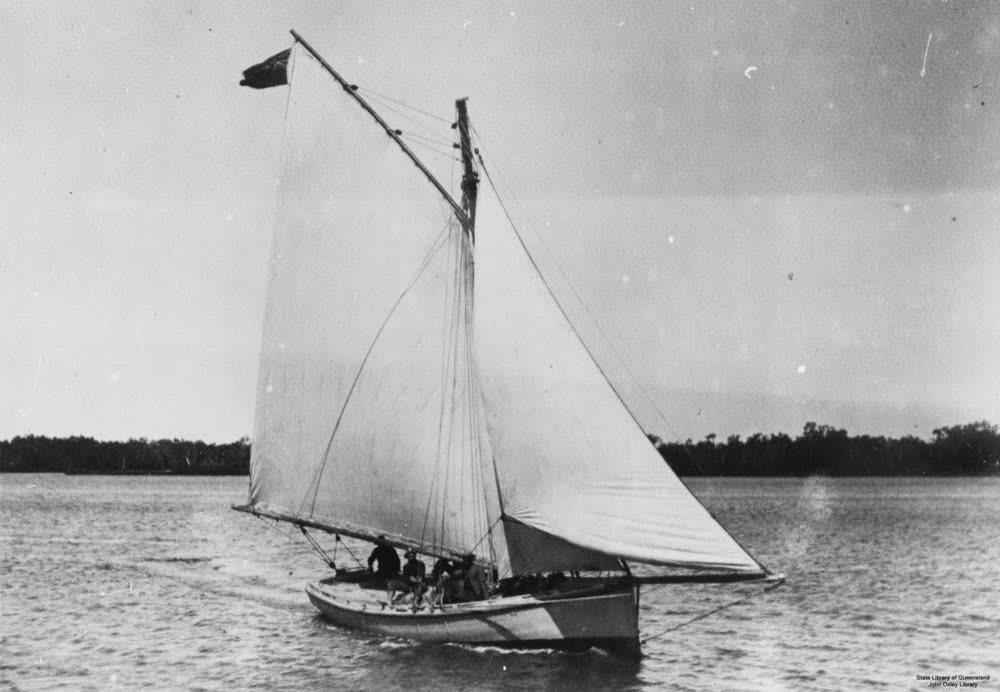
Colonial harvesting depleted the natural stocks, and organized farming began in the 1870s with "bank oystering", using sticks, rocks and shells to catch spat and grow oysters on the intertidal banks. Production rose from about 4,500 bags (281 metric tons) in 1870 to a peak of about 21,000 bags (1,313 metric tons) in 1891.1
Then the reefs failed. Land clearing had increased sediment in the bay by 1870, and after major floods in the late nineteenth century the subtidal reefs were infested by mudworms, Polydora. Growers moved to stick and tray culture, but by the early 1920s Queensland's production had fallen to about 2,000 bags (125 metric tons) a year. Since 1936 the industry has relied heavily on spat from New South Wales because natural recruitment is low. The researchers list a short harvest season, disease, competition from the introduced Pacific oyster and uncertain tenure among the reasons the industry stayed small.1
West et al. (2019), in Moreton Bay Quandamooka & Catchment.1
Flavor Breakdown
What Makes Moreton Bay Unique
Moreton Bay's oyster fishery is older than any farm: Quandamooka people ate these oysters for thousands of years and still build shell reefs to catch spat and restock beds, using methods passed down from their ancestors.12 The colonial industry boomed to 21,000 bags in 1891, then fell to a tenth of that by the 1920s.1
Should You Add Lemon?
A rock oyster stands up to lemon; try one plain first.
Pairing Guide
Right for subtropical heat.
Lean and bright.
| Optimal | Plain |
| Acceptable | Lemon |
| Avoid | Heavy cocktail sauce |
Who Is This For?
- Visitors to Brisbane and Moreton Bay
- Anyone interested in Indigenous oyster fisheries
- Anyone expecting a big Pacific oyster
- West, E., Conacher, C., Dexter, J., Lee, P., Heidenreich, M. & Paterson, B. (2019). Aquaculture in Moreton Bay. In Tibbetts, I.R. et al. (eds.), Moreton Bay Quandamooka & Catchment: Past, present, and future. The Moreton Bay Foundation. era.dpi.qld.gov.au (PDF)
- Reeder-Myers, L., Braje, T.J., Hofman, C.A., et al. (2022). Indigenous oyster fisheries persisted for millennia and should inform future management. Nature Communications, 13, 2383. doi.org/10.1038/s41467-022-29818-z