The most expensive oyster is rarely the best one on the table. Price in shellfish tracks rarity, freight and marketing. Quality tracks the month, how the oyster traveled, how it was handled, and whether whoever chose it knew what they were doing.
Ocean luxury runs on precision. The Champagne tower and the caviar by the kilo belong to a different idea. Here the luxury is a Damariscotta River oyster in January, from a farm you trust, served with nothing but its own liquor on very cold ice. It is also the decision to serve three varieties you are sure of when you could have bought eight, and the thirty seconds of explanation that tell a guest where each one grew.
What a Good Host Knows
A good host spends money on knowing things. They know their suppliers by name. They know a Pacific oyster in spring, still carrying the glycogen it stored over winter, eats very differently from the same oyster after spawning has used that store up and left it thin.1 And they know the metallic finish on a European flat oyster belongs to the species and says nothing about its age. Part of that sensation is smelled: in sensory tests, the metallic note of iron salts disappeared when the nose was blocked, though the bite of copper salts did not.2
The ice, the silver and the Champagne only carry that knowledge to the guest. Without it you have an expensive presentation. With it, a guest can taste an oyster and hear exactly where it grew and why it tastes the way it does.
The Collector's Sensibility
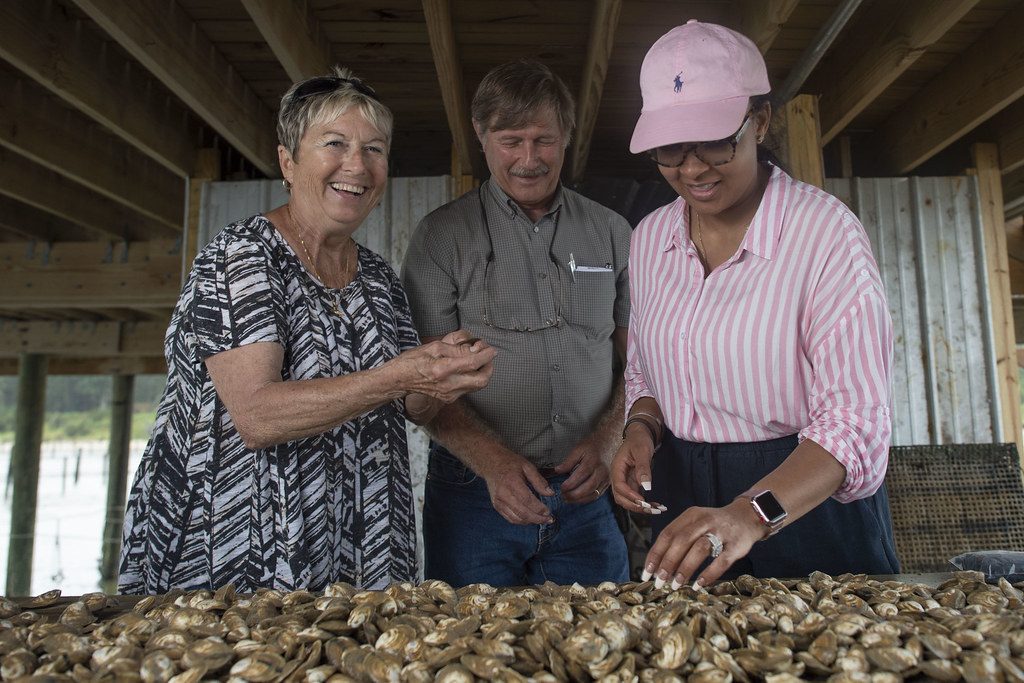
It helps to think like a collector. A gourmand piles up pleasures; a collector piles up knowledge and spends it on things nothing else can stand in for: a Belon in the cold months, say, or a Damariscotta River oyster at the bottom of winter. Each one comes from a single place at a single moment, and knowing that is what turns it from a menu item into something with a history.
Wine and art collectors know how deep knowledge changes what you see when you finally stand in front of the thing. Oysters give the same pleasure with a harder edge. The object is perishable, its peak is short, and eating it ends it. There is no going back down to the cellar for another look.
The Table as Curation
A host who understands this treats the oyster table like an art director treats a layout: nothing appears unless it has earned its place. The number of varieties is set by the story the selection can tell. The Champagne is chosen for what it does next to the oysters, whatever it cost. The classic match has chemistry behind it: long aging on the lees builds umami compounds in the wine that amplify the oyster's own.3 Someone has tasted the mignonette and adjusted it, and someone has checked the ice.
It is editing, the same skill that makes a good magazine or a good exhibition. Guests will not name every choice. They notice the result anyway, the way you notice a well-lit room without looking for the lamps.
What to Aim For
Aim for the moment a taste connects to a place. Tell guests what they are about to eat before they eat it. Give them a word for something they have tasted for years without naming. And if you serve a European flat oyster, warn newcomers about the copper-and-seaweed finish, so that it arrives as a discovery rather than a shock.
That is what ocean luxury means here: treating guests as adults who can meet something rare on its own terms, and setting the table so they can.
- Berthelin, C., Kellner, K. & Mathieu, M. (2000). Storage metabolism in the Pacific oyster (Crassostrea gigas) in relation to summer mortalities and reproductive cycle (West Coast of France). Comparative Biochemistry and Physiology B, 125(3), 359–369. doi.org/10.1016/S0305-0491(99)00187-X. See also Glycogen and the seasons.
- Lawless, H.T. et al. (2004). Metallic taste and retronasal smell. Chemical Senses, 29(1), 25–33. doi.org/10.1093/chemse/bjh003. See also why flat oysters taste metallic.
- Schmidt, C.V., Olsen, K. & Mouritsen, O.G. (2020). Umami synergy as the scientific principle behind taste-pairing champagne and oysters. Scientific Reports, 10, 20077. doi.org/10.1038/s41598-020-77107-w