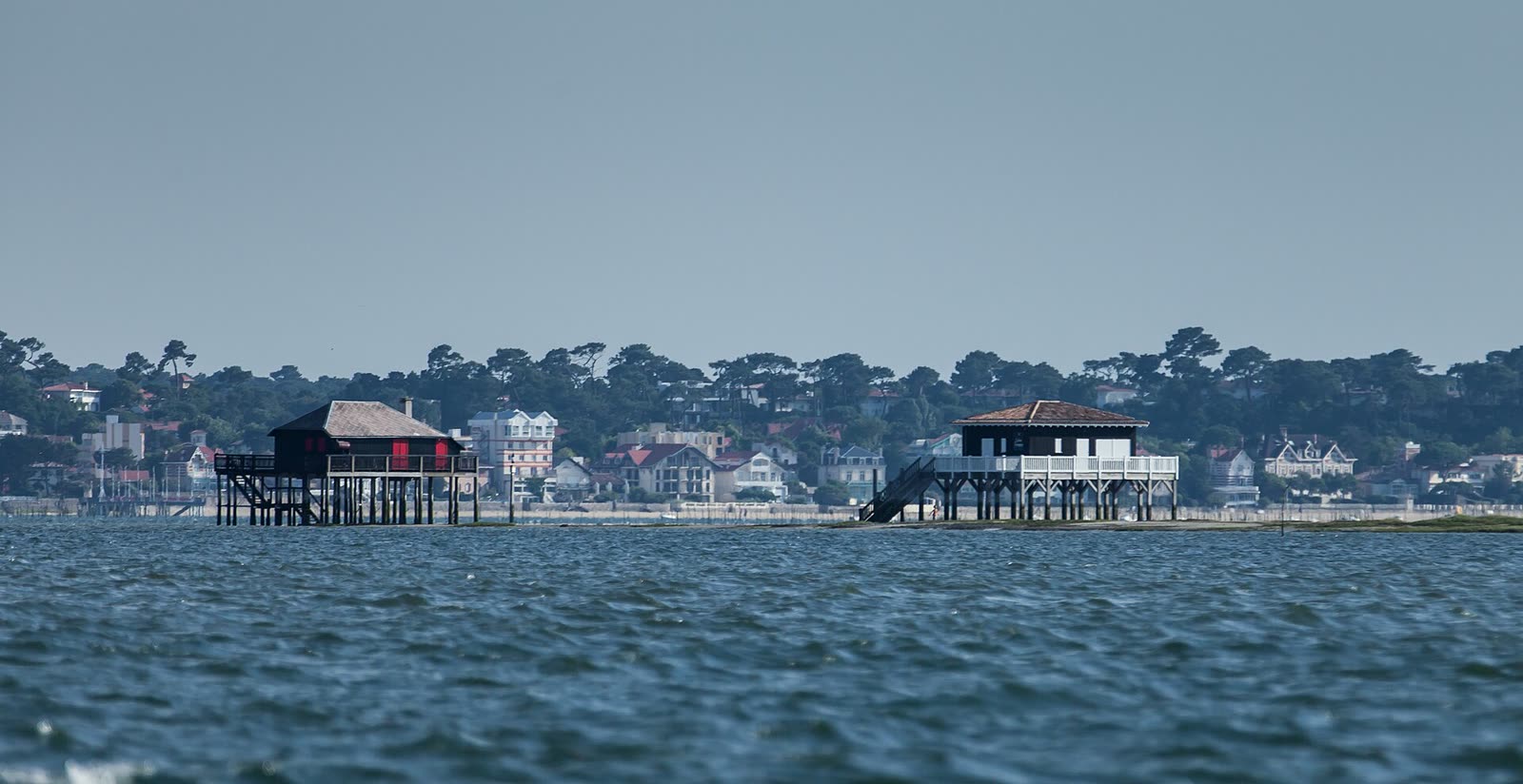
An hour west of Bordeaux, the Bassin d'Arcachon is a near-enclosed bay behind the Cap Ferret peninsula, with the great Dune du Pilat at its mouth. The bay has 23 oyster ports and thousands of wooden huts, and more than 80 of them sell oysters directly or serve tastings on the spot.1
Why Arcachon Matters
Arcachon's place in oyster history rests on the spat, the youngest oysters. Growers here have caught wild spat on lime-coated tiles since the late 1850s.2 Fresh water from the Leyre river feeds the phytoplankton, which made the bay a major source of young oysters. Its first official beds date from Napoleon III, who regulated the trade in the nineteenth century.1
Every disease wave in French oyster history reached the bay. Its native flat oyster, known locally as the gravette, was decimated in the 1920s and replaced by the Portuguese oyster, which in turn disappeared in the 1970s. Today the bay grows the Pacific (Japanese) cupped oyster.1 The Portuguese oyster's story is told in Hemingway's portugaises, and the epidemics in the diseases that redrew the oyster map.

Where to Go
What to Order
The departmental tourism guide describes four growing areas in the bay, each with its own character: Cap Ferret, the Banc d'Arguin, the Île aux Oiseaux and the Grand Banc.1 Ask the grower at the hut where the oysters on your plate were grown, and if you can, taste two areas side by side. Bay oysters take about three years to reach the table.1
- Guide Bordeaux Gironde (departmental tourism guide). "Oysters from the Arcachon basin, Cap Ferret and Médoc at your table!" guide-bordeaux-gironde.com
- Gujan-Mestras Tourism. "The Oyster House." tourisme-gujanmestras.com
- Arcachon Bay Tourism. "The oyster ports of Bassin d'Arcachon and fishing villages." bassin-arcachon.com