Basic Profile
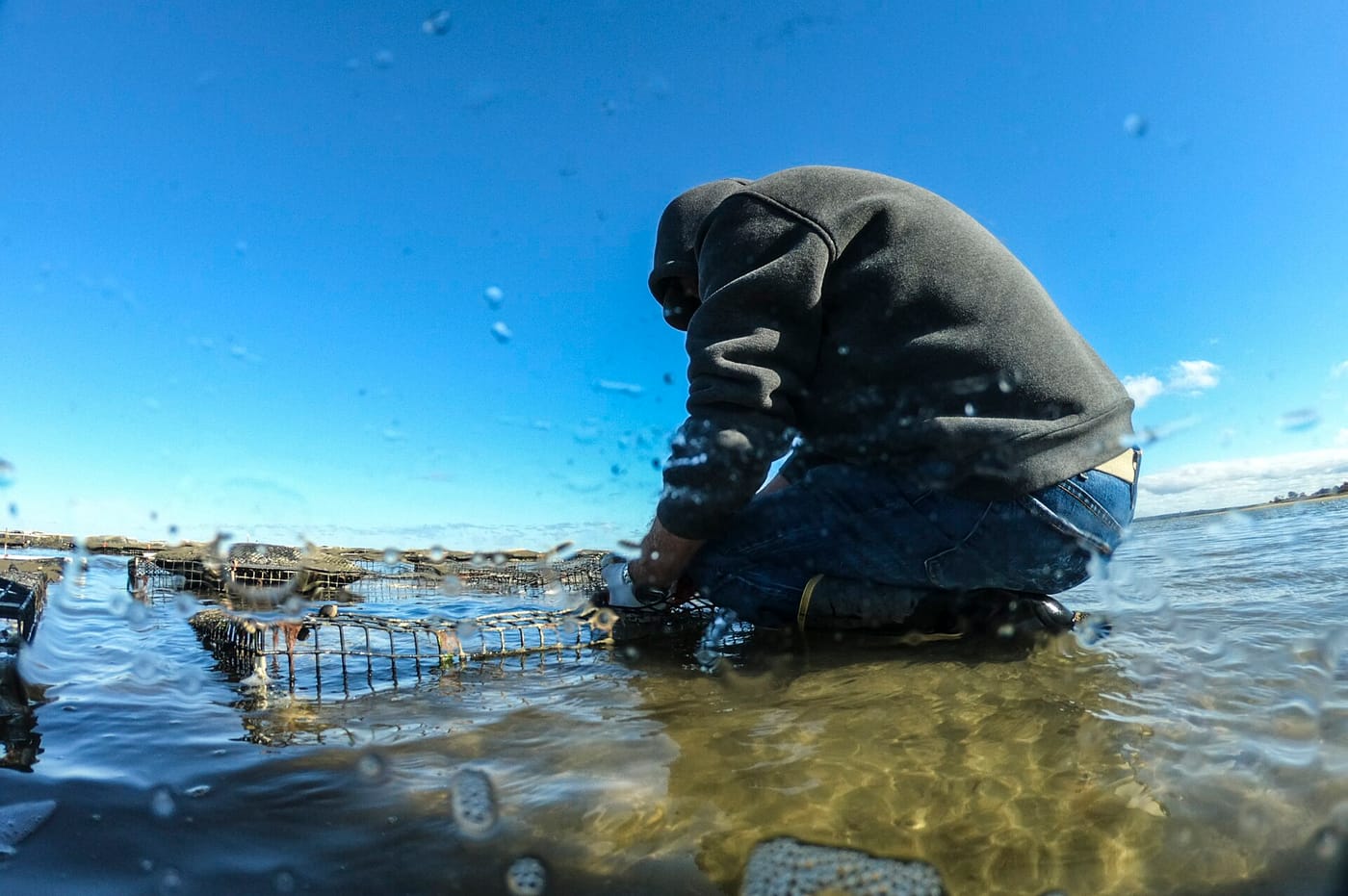
Until the mid-1990s the sand flats of Barnstable Harbor were empty. The Army Corps of Engineers then approved them for aquaculture, finding it would not harm other species, and by 2010 about 52 grants covered 100 acres, growing oysters, steamers, littlenecks and quahogs.1
.jpg)
How a Grant Works
Grants are leased from the town, and there is a waiting list, as there is for boat slips. Unlike a slip, a grant can be sold, inherited or given away. A typical one is two acres: 125 feet wide and 700 long.1
Barnstable Sea Farms has worked the harbor since 1991, ahead of that expansion, and sells its harbor oysters as Sandy Necks, grown in cages and bags.2 Another grant is profiled under Moon Shoal.
Flavor Breakdown
What Makes Barnstable Harbor Unique
Almost none of this existed before the 1990s. A harbor of bare flats became a hundred acres of small farms in about fifteen years, each on a town lease that can be passed down like property.1
Should You Add Lemon?
Takes a squeeze without trouble.
Pairing Guide
The safe, lean choice.
Cold, for a summer afternoon on the Cape.
| Optimal | Plain or lemon |
| Acceptable | Mignonette |
| Avoid | Heavy cocktail sauce |
Who Is This For?
- People who want an all-round Cape oyster
- Anyone interested in how towns hand out the right to farm
- Those hunting for one famous name
- Petiet, M. (13 July 2010). "Moon Shoal Farm." Edible Cape Cod. ediblecapecod.ediblecommunities.com
- Barnstable Sea Farms. "About Our Farm." barnstableseafarms.net