Basic Profile
Blue Point oysters take their name from the hamlet of Blue Point on Long Island's Great South Bay, where Humphrey Avery is said to have planted oysters in 1815. In 1908 New York passed a law allowing the name only for oysters cultivated in the Great South Bay.1
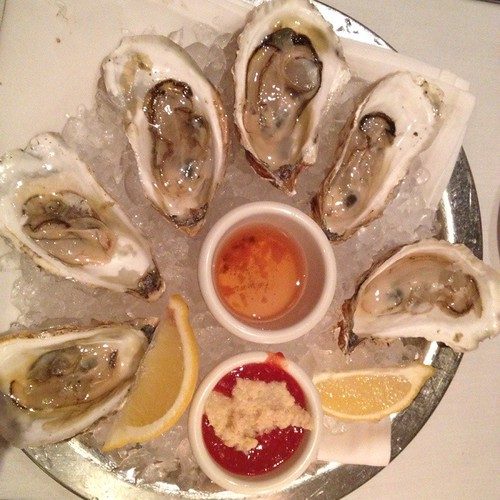
What the Name Means Now
The law is not enforced, and "Blue Point" now appears on menus for oysters from New York, Connecticut, Delaware, New Jersey and Virginia; the Connecticut side of Long Island Sound has become the main source. Great South Bay's own fishery collapsed around 1910 from pollution, and storms in 1931 and 1938 all but ended it.1 A Blue Point today tells you the species and roughly the coast, not the bay. Ask where it was grown, or order one that names its water, such as Copps Island.
Flavor Breakdown
What Makes Blue Point Unique
Blue Point has a law behind it, a 1908 New York statute reserving the name for Great South Bay, and almost no enforcement.1 The bay's own fishery collapsed around 1910, and the name outlived it.
Should You Add Lemon?
A good all-purpose raw bar oyster; lemon or mignonette both work.
Pairing Guide
The classic raw bar match.
Lean and salty.
| Optimal | Mignonette or lemon |
| Acceptable | Cocktail sauce |
| Avoid | Nothing needed |
Who Is This For?
- Anyone who wants an affordable, familiar Eastern oyster
- Anyone who wants to know exactly where their oyster grew
- Pangea Shellfish Company. "Blue Points: The Most Bastardized Name in Seafood and Why You Should Care." pangeashellfish.com