Basic Profile
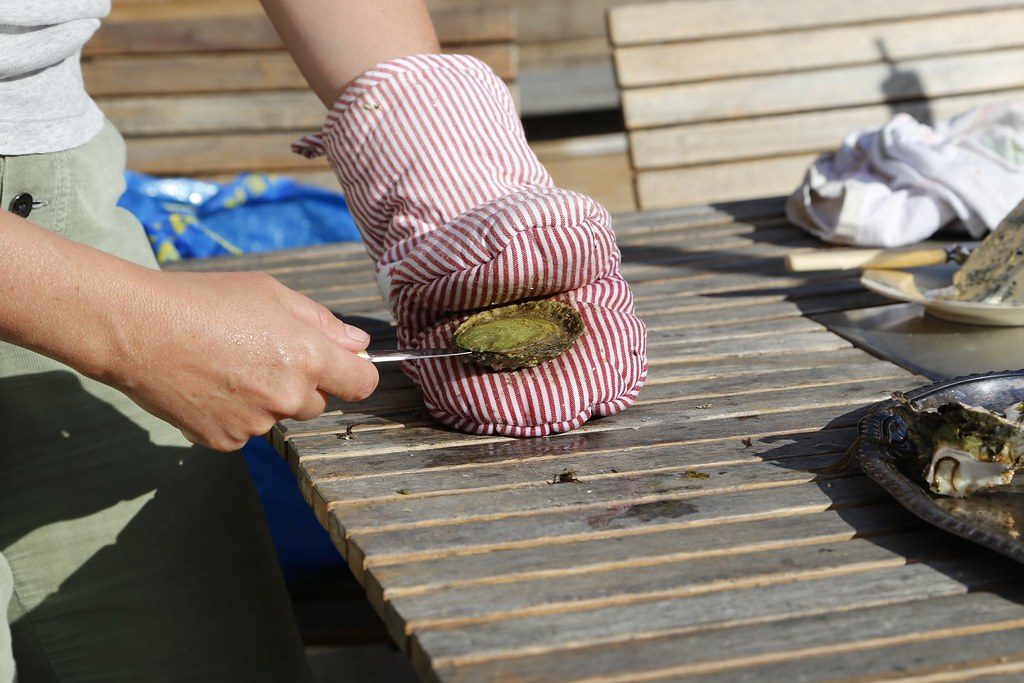
Sweden's native oysters are European flat oysters, Ostrea edulis, found in the Skagerrak and mainly in the northern and middle parts of Bohuslän, the rocky archipelago on the country's west coast.1 About 90% of Sweden's oysters come from the municipality of Tanum, around the fishing village of Grebbestad.2 They are wild, and they are picked by hand.
At the Edge of the Range
Bohuslän is at the northern edge of the flat oyster's natural range. The species lives from the shoreline to about 20 meters deep, in strong currents, and needs warm water to breed: males mature at 12 °C or more, and the switch between sexes, which these oysters make through their lives, happens at 15 to 16 °C.1 When parasites nearly wiped out Europe's flat oysters in the 1960s, Sweden's colder waters helped its local populations survive.3 That story is told in the diseases that redrew the oyster map.
A Protected Name
On May 22, 2023, Grebbestadostron, the Grebbestad oyster, was registered as a Protected Designation of Origin. The application came from Bröderna Klemmings Dykhjälp, which has worked the Grebbestad archipelago since the early 2000s. The protected area covers the archipelago within the Lur, Tanum, Fjällbacka and Kville districts. The oysters are wild and are hand-picked by divers or gathered with nets by wading fishers, without touching the seabed.3 Oysters from here were supplied to the Swedish and Danish courts from the 1600s.3 What a designation like that does and does not promise is covered in what oyster labels guarantee.
An Unwelcome Neighbor
The Pacific oyster has spread through Bohuslän and Halland since the mid-2000s, and is treated as an invasive species.1 So an oyster from these waters is not automatically a native: ask for flat oysters. How it got there is in how the Pacific oyster escaped into northern Europe.
Flavor Breakdown
What Makes Bohuslän Unique
Bohuslän's oysters are wild flats, picked by hand by divers or gathered by wading fishers who never drag the seabed, and they now carry a Protected Designation of Origin as Grebbestadostron.3 The cold that keeps them growing slowly also helped them survive the parasites that nearly wiped out Europe's flat oysters in the 1960s.1
Should You Add Lemon?
A wild flat oyster's metallic finish is the point; lemon hides it.
Pairing Guide
Chalk and acid for a mineral oyster.
The Swedish coast's own pour, in small sips.
| Optimal | Plain |
| Acceptable | A few drops of mignonette |
| Avoid | Cocktail sauce |
Who Is This For?
- Flat oyster devotees
- Visitors to Sweden's west coast
- Anyone who dislikes metallic, mineral oysters
- Swedish Agency for Marine and Water Management (Havs- och vattenmyndigheten). "Ostron." havochvatten.se
- Tanum Municipality. "Ett mecka för ostronälskare! 90 procent av Sveriges ostron kommer från Tanums kommun." tanum.se
- Smaka Sverige (Swedish Board of Agriculture). "Grebbestadostron." smakasverige.se