Basic Profile
Cancale sits on the Breton side of the Bay of Mont-Saint-Michel, where the tides are among the strongest in the world. Its farms grow cupped oysters for three to four years on the intertidal parks, and flat oysters in deep water within the bay.1
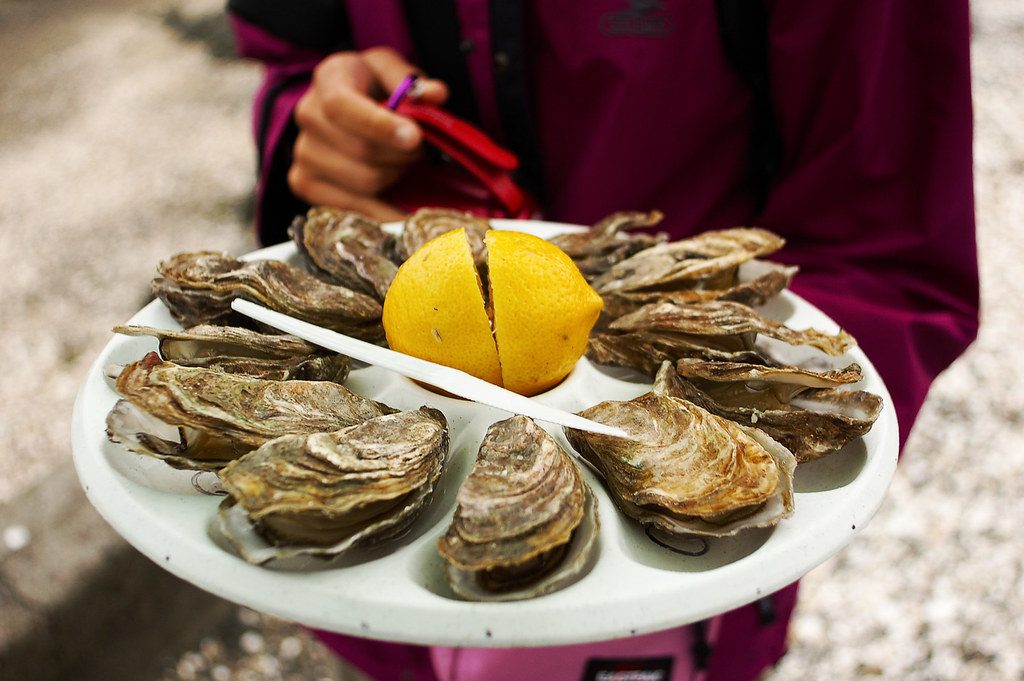
The Market
The oyster market on the port of La Houle runs all year, with farmers selling straight from their stalls in view of the parks.1 Oyster farming in Cancale is listed as part of France's intangible cultural heritage.1
The Flats
Cancale's historic oyster is the flat, sold as the Belon de Cancale after the river in Finistère; Louis XIV favored the town's flats.1 One family house, La Belon de Cancale, grows them in parks more than 16 meters deep in the bay and grades them from No. 4 (40 g) to No. 0000 (up to 150 g). The very largest are called Pied de Cheval.2
Flavor Breakdown
What Makes Cancale Unique
Cancale's oysters live under one of the largest tidal ranges on Earth, which drives huge volumes of water over the parks every day.1 Add a market on the quay and flats grown in deep water in the same bay, and you can taste both species a few steps from where they grew.
Should You Add Lemon?
The market sells lemons for a reason; try one plain first.
Pairing Guide
The Breton coast's default white.
Local, tart and cheap at the port.
| Optimal | Lemon |
| Acceptable | Shallot mignonette |
| Avoid | Cocktail sauce |
Who Is This For?
- Visitors to Saint-Malo and Mont-Saint-Michel
- Anyone who wants cupped and flat oysters side by side
- Anyone who dislikes strong iodine
- Saint-Malo – Mont-Saint-Michel Bay Tourism. "Oysters from Cancale." saint-malo-tourisme.co.uk
- La Belon de Cancale. "Flat and deep-water hollow oyster producers." labelondecancale.bzh