Basic Profile
Oysters were first planted at Chincoteague in 1864, and by the 1930s the island was one of the largest oyster shipping points on Virginia's Eastern Shore, sending about 175,000 gallons a season in cans packed with crushed ice.1
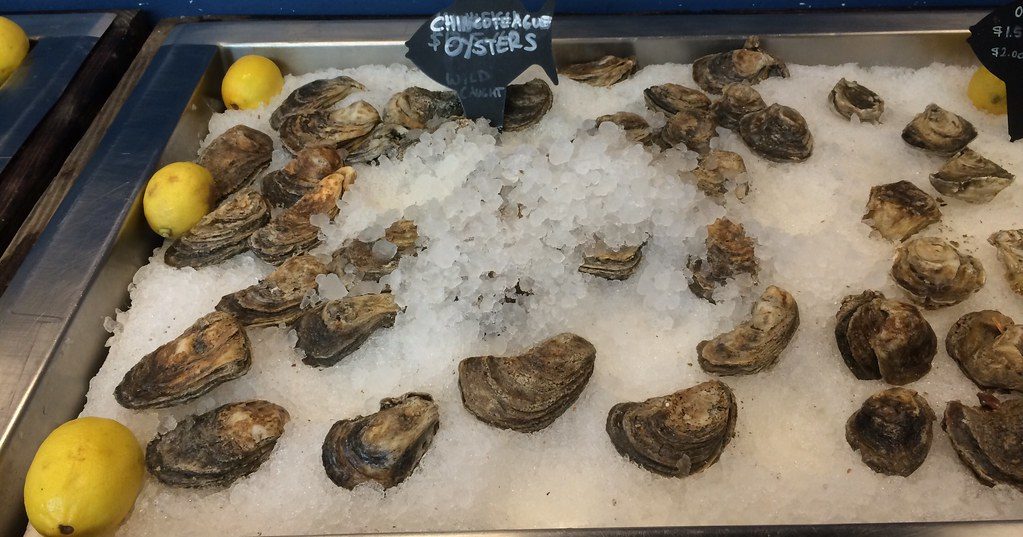
The Ballards
Ballard Fish and Oyster Company, run by the fifth generation of the Ballard family, has grown oysters here for more than 115 years. Its Chincoteague oysters are triploids raised in cages and trays over sandy bottom in the swift tidal flow of the Assateague channels, and reach market in 18 to 24 months.2 Triploids don't spawn, which keeps them in condition through the summer; see what triploid means.
Flavor Breakdown
What Makes Chincoteague Unique
Chincoteague sells salt. Its oysters grow on the seaside of Virginia's Eastern Shore, in channels behind Assateague Island with a swift tidal flow,2 and the island has been shipping them since the nineteenth century.1 Taste one next to a Chesapeake river oyster and the difference is obvious.
Should You Add Lemon?
A salty oyster takes lemon well.
Pairing Guide
Pangea's suggestion, and a good one: sweet and cold against the salt.
Salty, bright and local.
| Optimal | Lemon or mignonette |
| Acceptable | Cocktail sauce |
| Avoid | Nothing, if you love salt |
Who Is This For?
- Salt lovers
- Visitors to Chincoteague and Assateague
- Anyone who wants a sweet, low-salt oyster
- Mears, M.E. (August 13, 1932). "Chincoteague and the Seafood Industry." Peninsula Enterprise, via The Countryside Transformed, University of Virginia. eshore.iath.virginia.edu
- Pangea Shellfish Company. "Chincoteague Oyster." pangeashellfish.com