Basic Profile
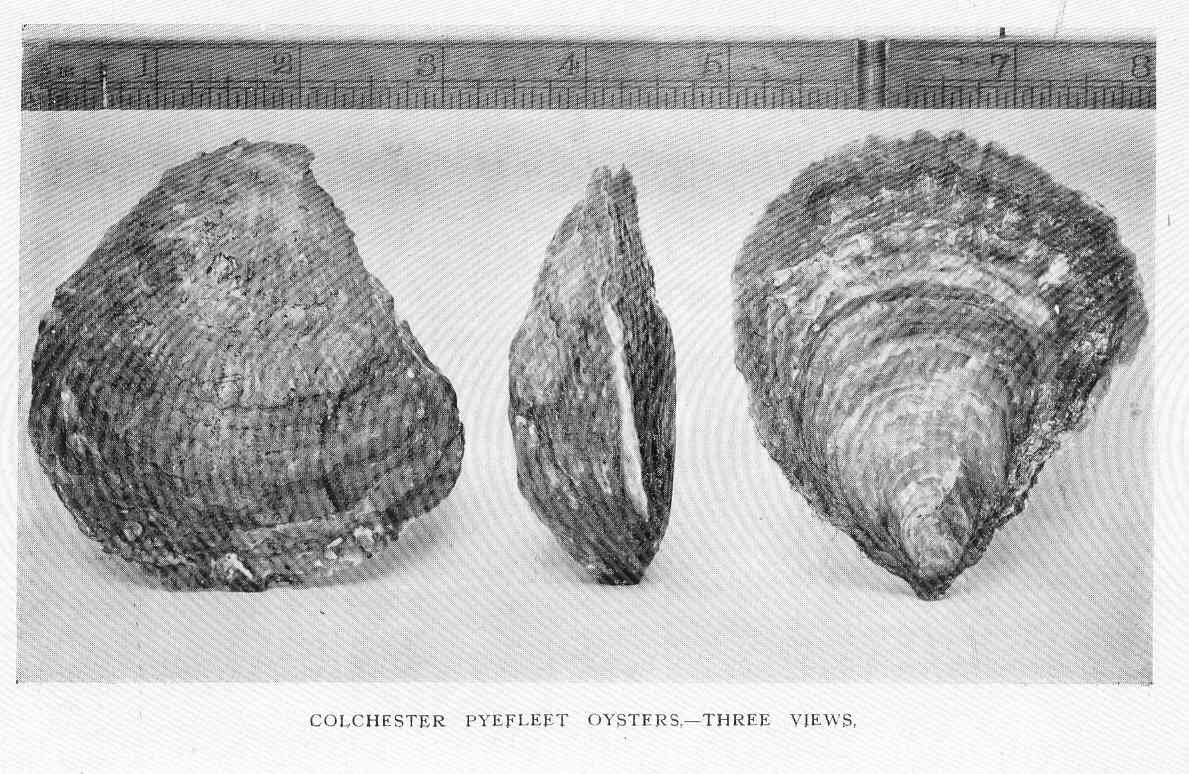
The native flat oysters of the River Colne, sold as Colchester or Pyefleet oysters, come with more paperwork than almost any food in England. Richard I's charter of 1189 confirmed the fishery to the borough of Colchester, and every autumn the town still marks it with its civic Oyster Feast.12

Eight Centuries of Rules
The 1189 charter left the fishery's seaward boundary, "Westness", undefined, and Colchester argued about it with neighboring lords, the Duke of York and Brightlingsea's dredgermen for centuries, until an Act of 1758 fixed it at St Osyth point. Conservation is old here too. In 1566, after overfishing, the borough allowed oysters to be sold only at the Hythe, closed the season from Easter to September 14, and threatened unlicensed dredgers with prison.1
Boom and Bust
In 1807 the fishermen formed a cooperative company, and the number of licensed dredgermen grew from 73 to 413 by 1866. The Colne Fishery Act of 1870 made the company a legal body. Sales rose from 675,000 oysters in the 1893–94 season to 2.7 million in 1894–95. Then a typhoid outbreak in 1895, linked to Brightlingsea oysters, hurt demand; the American slipper limpet, an accidental import, spread over the beds; and by 1930 sales were a seventh of their 1898 level. The hard winter of 1963 killed 85% of the prime stock in the Pyefleet, and by the 1980s most oysters sold locally were imported.1
Victoria County History of Essex, vol. 9; University of Essex.13
Restoration
The European native oyster has declined by about 95% over the last 200 years. In 2013 the Blackwater, Crouch, Roach and Colne estuaries became a Marine Conservation Zone, the first in England designated for the recovery of native oysters, after University of Essex research showed the estuaries were a stronghold for the species in the southern North Sea. The Essex Native Oyster Restoration Initiative, led by the Zoological Society of London, has set up the region's first "mother oyster" sanctuary.3 The wider effort is covered in restoring native oysters.
Flavor Breakdown
What Makes Colchester Native Unique
Colchester has written rules about its oysters for more than 800 years, from Richard I's charter of 1189 to a closed season in 1566 and a fishery act in 1870.1 The beds collapsed in the twentieth century, and the estuaries are now England's first Marine Conservation Zone designated for native oyster recovery.3 A Colchester native is a taste of that long history and of a fragile recovery.
Should You Add Lemon?
A flat oyster's finish is the point; lemon cuts it short.
Pairing Guide
Local, chalky and sharp.
Dry and roasty against a long, metallic finish.
| Optimal | Plain |
| Acceptable | A few drops of mignonette |
| Avoid | Cocktail sauce |
Who Is This For?
- Flat oyster fans
- Anyone interested in English food history
- Anyone who dislikes metallic, mineral oysters
- Cooper, J. et al. (eds.) (1994). "Fishery," in A History of the County of Essex, vol. 9: The Borough of Colchester, pp. 264–269. Victoria County History, via British History Online. british-history.ac.uk
- Colchester City Council. "A brief history of the Colchester Native Oyster." colchester.gov.uk (archived 8 Oct 2025; the council has since moved its site)
- University of Essex. "Impact: How we are helping protect the European native oyster." essex.ac.uk