Basic Profile
The Bélon is a short tidal river in southern Finistère, and Riec-sur-Bélon, between the Aven and the Bélon, calls itself the capital of the flat oyster. Flat oysters about three years old, born elsewhere in Brittany, are moved to farms along its banks to finish, in water where fresh and salt mix with every tide.1
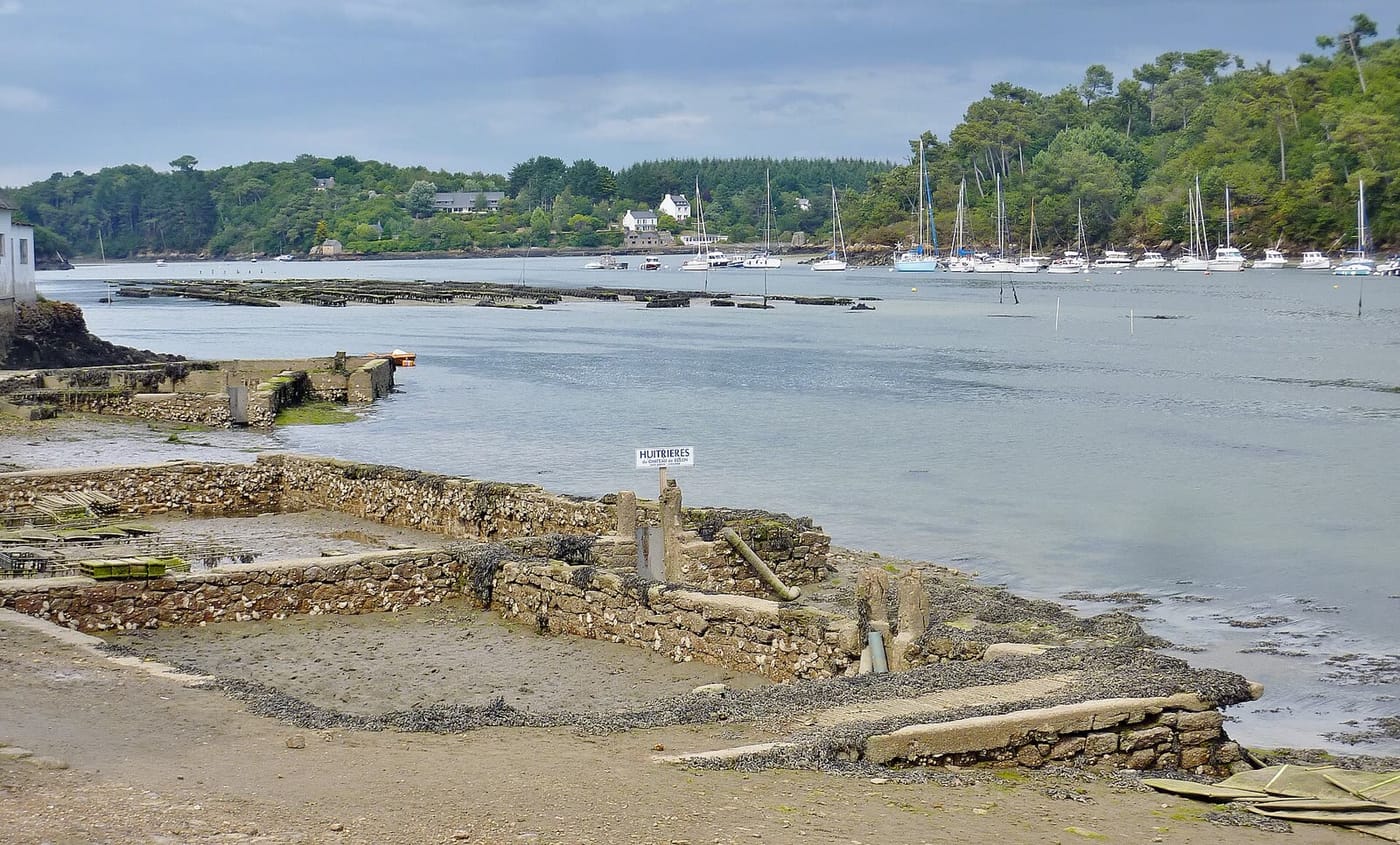

The River's Oyster Houses
Oyster farming on the estuary dates to the mid-nineteenth century: the local tourist office gives 1864 as the year the first oyster farm was established in the ria.2 The Belon is a European flat oyster, Ostrea edulis, the species that was nearly wiped out in France by two parasites in the 1970s; its history is in the diseases that redrew the oyster map. The name has traveled: Maine sells its wild flats as Belons too.
Flavor Breakdown
What Makes Belon Unique
The Belon is a finishing oyster: born and raised elsewhere in Brittany, then brought to one small estuary for its last months because of what the river water does to it.1 It is the flat oyster that gave a name to the whole category, borrowed as far away as Maine.
Should You Add Lemon?
The finish is the point; lemon cuts it off.
Pairing Guide
The Loire white Brittany drinks with flats.
Chalk against metal.
| Optimal | Plain |
| Acceptable | A few drops of shallot mignonette |
| Avoid | Cocktail sauce |
Who Is This For?
- Flat oyster devotees
- Visitors to Riec-sur-Bélon and Pont-Aven
- First-timers who may find the metal startling
- Brittany Tourism. "Riec-sur-Bélon." brittanytourism.com
- Quimperlé Terre Océane tourism. "The Bélon." quimperle-lesrias.bzh