Basic Profile
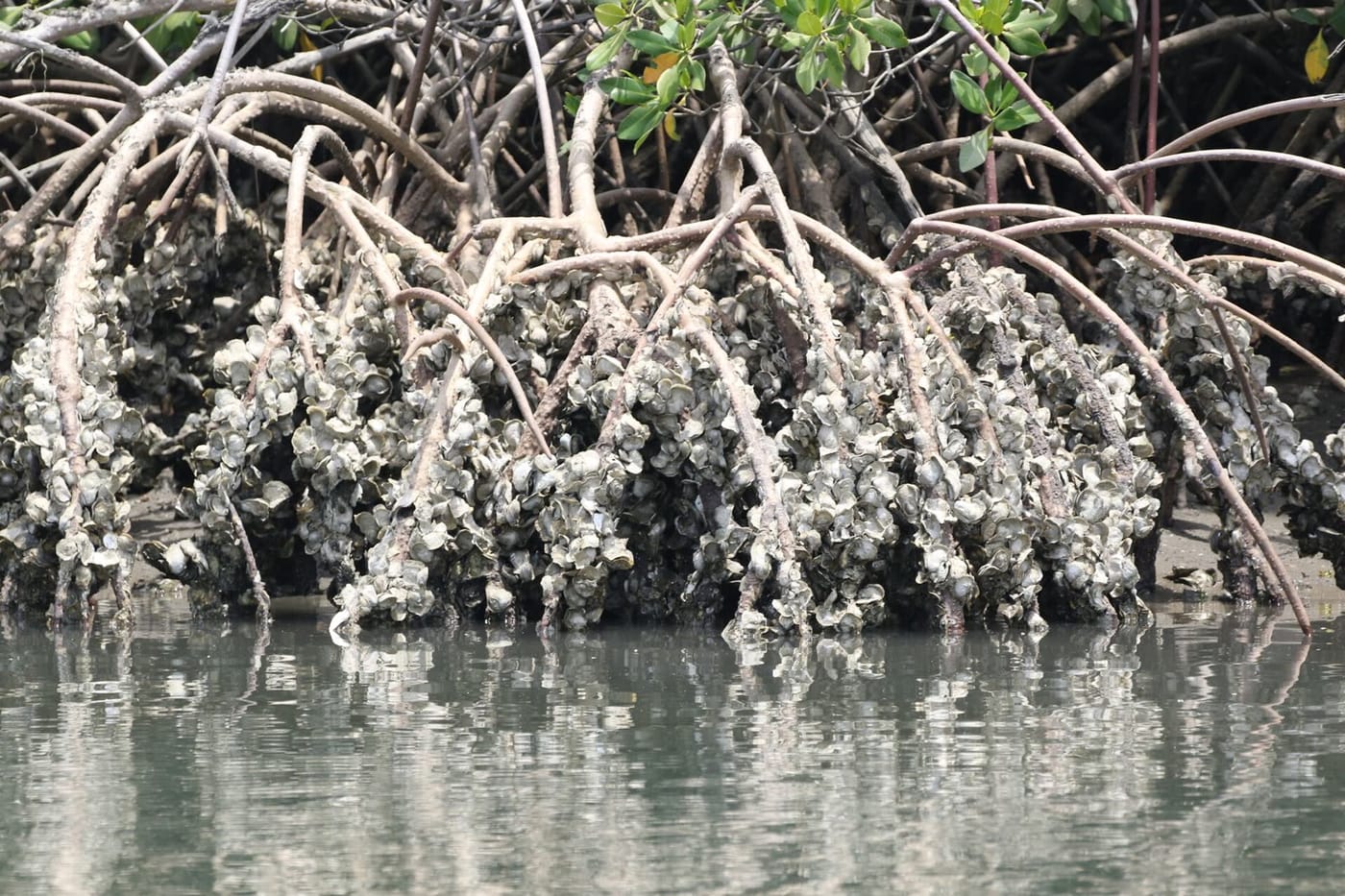
West Africa's mangrove oyster, long known as Crassostrea gasar, grows on the roots of mangroves along the coast and is harvested mostly by women, from mangrove roots at low tide.2

TRY in The Gambia
The TRY Oyster Women's Association, founded in 2007 in the Greater Banjul area, brings together more than 500 women who harvest oysters and cockles in the Tanbi Wetlands, a 6,300-hectare reserve. It led the co-management plan for the Tanbi's oysters and cockles and won the UN's Equator Prize in 2012. In 2011 the harvesters chose to lengthen the closed season, selling fresh oysters only from March to June, and saw larger oysters as a result.1
Beyond the Fresh Season
The association has worked on storing oysters in oil, freezing and smoking them, which lets harvesters sell for a better price up to three months after the season ends.1
Flavor Breakdown
What Makes West African Mangrove Oyster Unique
This is an oyster whose story is its harvesters: women who pick it from mangrove roots at low tide, and in The Gambia manage the beds themselves, closing them longer so the oysters grow bigger.1
Should You Add Lemon?
It is usually eaten cooked, where a squeeze of lime helps.
Pairing Guide
For a cooked or smoked oyster.
A West African table drink, tart and cold.
| Optimal | Lime and chili |
| Acceptable | Plain |
| Avoid | Nothing heavy |
Who Is This For?
- Anyone interested in community-run fisheries
- Travelers in The Gambia and Senegal
- Anyone looking for a raw half-shell oyster to import
- United Nations Development Programme (2013). "TRY Oyster Women's Association, The Gambia." Equator Initiative Case Study Series. equatorinitiative.org (PDF)
- FAO FISH4ACP. "Gambia – oyster." fao.org