Basic Profile
Most of the Salish Sea struggles to get above 12°C. Pendrell Sound, an arm of Desolation Sound, reaches 25°C in summer, and some call it the warmest Pacific water north of Mexico. It lies near where the tides of Johnstone and Georgia straits meet, deep but poorly flushed, so warm water stays at the surface.1
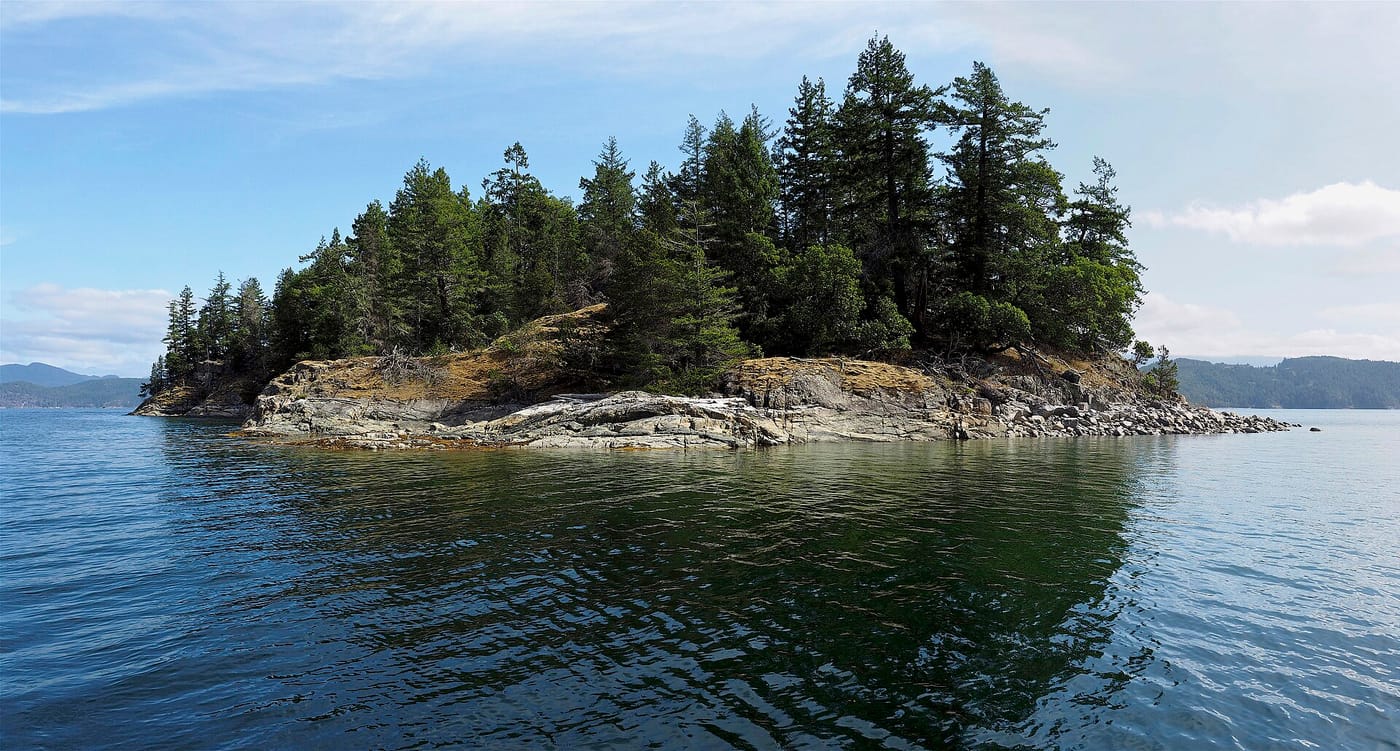

A Nursery by Accident
The Pacific oyster needs warm water to spawn, which is why it rarely breeds on this coast. In Pendrell Sound it does. Spat set there in huge quantities, and once grew more than a foot deep on the rocky beaches.2 Growers collect that seed, and the trade is delicate enough that the sound has a ban on sewage discharge and a no-wake speed limit.1
Nearby farms are covered in the Cortes Island and Okeover Inlet profiles.
Flavor Breakdown
What Makes Desolation Sound Unique
Here the Pacific oyster breeds in the wild and in quantity, with no hatchery involved.2 Boaters know Pendrell Sound for swimming; growers know it as the source of their seed.1
Should You Add Lemon?
A little is fine. The mineral finish is the part worth keeping.
Pairing Guide
Stony and lean, in step with the finish.
The local pour, with more fruit.
| Optimal | Plain |
| Acceptable | Mignonette |
| Avoid | Cocktail sauce |
Who Is This For?
- People who like firm, mineral Pacifics
- Boaters cruising the sound
- Anyone ordering in late summer
- Salish Sea Pilot. "Pendrell Sound famously tepid." salishseapilot.com
- Okeover Harbour Authority. "Aquaculture." okeoverharbourauthority.com