Basic Profile
Most oysters are gray or cream inside. The Fine de Claire Verte, from the Marennes-Oléron basin on France's Atlantic coast, has green gills, and that color is written into its official specification. In 1989 it became the first oyster from the basin to earn an official quality sign, the Label Rouge, with green flesh as one of its required characteristics.1

Where the Green Comes From
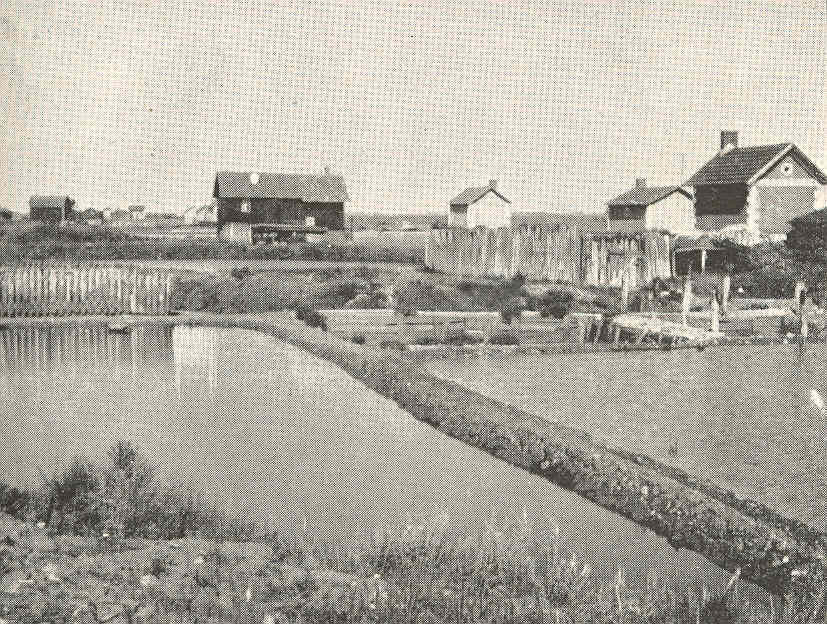
The bottoms of the claires, the shallow clay ponds of Marennes-Oléron, can be covered from time to time by a diatom, Haslea ostrearia, known locally as the "navicule bleue". It contains a blue pigment called marennine, named after Marennes. As the oysters filter the water, the pigment turns their gills green.1 Researchers note that the oysters mainly collect the pigment released into the water on the mucus cells of their gills, and that blooms of the diatom have been recorded in oyster ponds since the nineteenth century. Green-gilled oysters have been reported elsewhere too, from England's Colchester to Virginia.2
The Rules
A Fine de Claire Verte must first meet the standard of a Fine de Claire: finished in the Marennes-Oléron claires, with a filling index, the share of the oyster's weight that is meat, between 7 and 10.5. Greening usually happens during or after that finishing. When it takes place in dedicated greening ponds, it lasts between 5 and 15 days, at no more than 9 kg of oysters per square meter.1 An oyster that fails any of the criteria loses the name. The pond itself is explained in inside the claire.
Cahier des charges, IGP « Huîtres Marennes Oléron » (2021 revision).1
Flavor Breakdown
What Makes Fine de Claire Verte Unique
The Fine de Claire Verte's official specification requires green gills. The color comes from a diatom's blue pigment, filtered onto the gills in the clay ponds of Marennes-Oléron,2 and in 1989 it made this the first oyster from the basin to earn a Label Rouge.1
Should You Add Lemon?
Less salty than a sea oyster; a little lemon is fine, but look at the green first.
Pairing Guide
The region's own aperitif.
The classic white for Atlantic oysters.
| Optimal | Plain |
| Acceptable | Mignonette with shallots |
| Avoid | Cocktail sauce |
Who Is This For?
- Anyone curious about why some oysters are green
- Fans of softer, less salty oysters
- Salt hunters, who should order a Cancale
- INAO / Comité national des IGP. Cahier des charges de l'IGP « Huîtres Marennes Oléron » (modification approved October 7, 2021). extranet.inao.gouv.fr
- Seveno, J., Car, A., Sirjacobs, D., et al. (2023). Benthic Diatom Blooms of Blue Haslea spp. in the Mediterranean Sea. Marine Drugs, 21(11), 583. doi.org/10.3390/md21110583