Basic Profile
A Fine de Claire is an oyster grown at sea and then finished, or "affiné", in the claires of Marennes-Oléron: shallow ponds dug into the clay marshes behind the coast. Under the IGP "Huîtres Marennes Oléron", it must have a filling index, the share of its weight that is meat, of 7 to 10.5.1
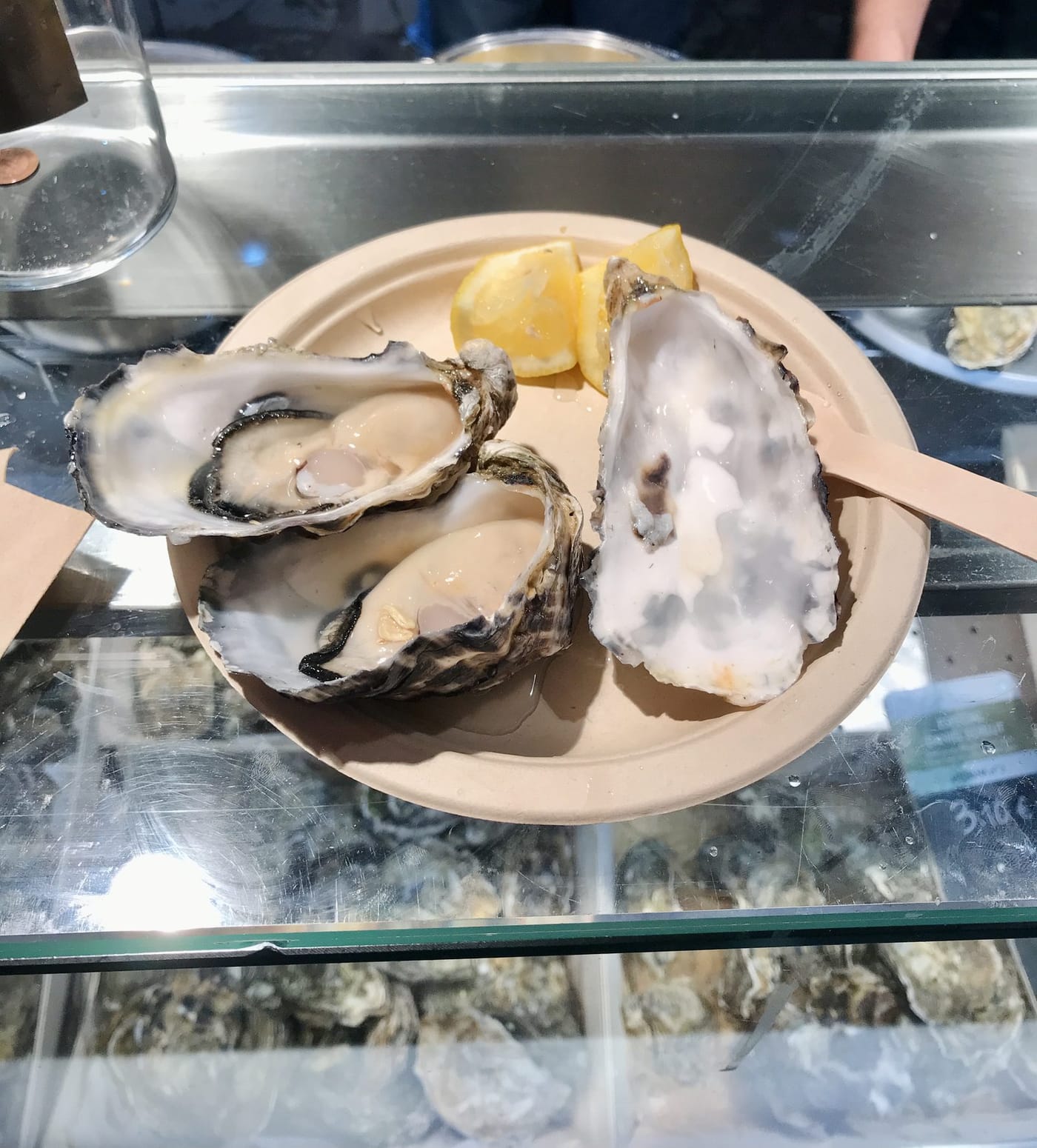
How Long in the Pond
The rules tie the finishing time to how crowded the pond is: at least 14 days at up to 1 kg of oysters per square meter, 21 days at up to 2 kg, or 28 days at up to 3 kg.1 An oyster that fails any criterion loses the name. The claire itself is explained in inside the claire.
Three Grades
The same specification defines the grades above it by meat content: Spéciale de Claire from 10.5, and Pousse en Claire from 12. A Fine de Claire whose gills have turned green in the pond can be sold as a Fine de Claire Verte.1 Marennes-Oléron holds most of France's claires, 92% by the specification's count.1
Flavor Breakdown
What Makes Fine de Claire Unique
The Fine de Claire is the simplest way to taste what a claire does. A few weeks in a clay pond, where the water is calmer than the open sea, is enough to take the edge off the salt and the strong iodine.1
Should You Add Lemon?
A finished oyster is already softened; try one plain first.
Pairing Guide
The classic Atlantic white, lean against a watery oyster.
A crisp Bordeaux white from just down the coast.
| Optimal | Plain |
| Acceptable | Shallot mignonette |
| Avoid | Cocktail sauce |
Who Is This For?
- Anyone new to French oysters
- Diners who want a softer, less salty oyster
- Anyone who wants a dense, meaty oyster: go up a grade
- INAO / Comité national des IGP. Cahier des charges de l'IGP « Huîtres Marennes Oléron » (modification approved October 7, 2021). extranet.inao.gouv.fr (PDF)