Basic Profile
Hiroshima Prefecture grew 62.7% of Japan's 29,846 metric tons of oysters in 2018, more than six times the next prefecture. Oyster farming here began in the Muromachi period, around 1532–1555.1
From Tidal Flats to Rafts
The first farmers arranged pebbles on the tidal flats to collect young oysters. Today the larvae settle on scallop shells and are hung from rafts, with a period of air exposure to toughen them before the main growing stage.1 Hiroshima keeps separate harvest areas for oysters to be eaten raw and those for cooking, and purifies its oysters before sale.1
Flavor Breakdown
What Makes Hiroshima Unique
Hiroshima is oyster farming at national scale: nearly two-thirds of Japan's crop, from rafts that replaced the pebble beds of the 1500s.1 The prefecture keeps separate waters for oysters to be eaten raw and for those to be cooked, so ask which kind is in front of you.
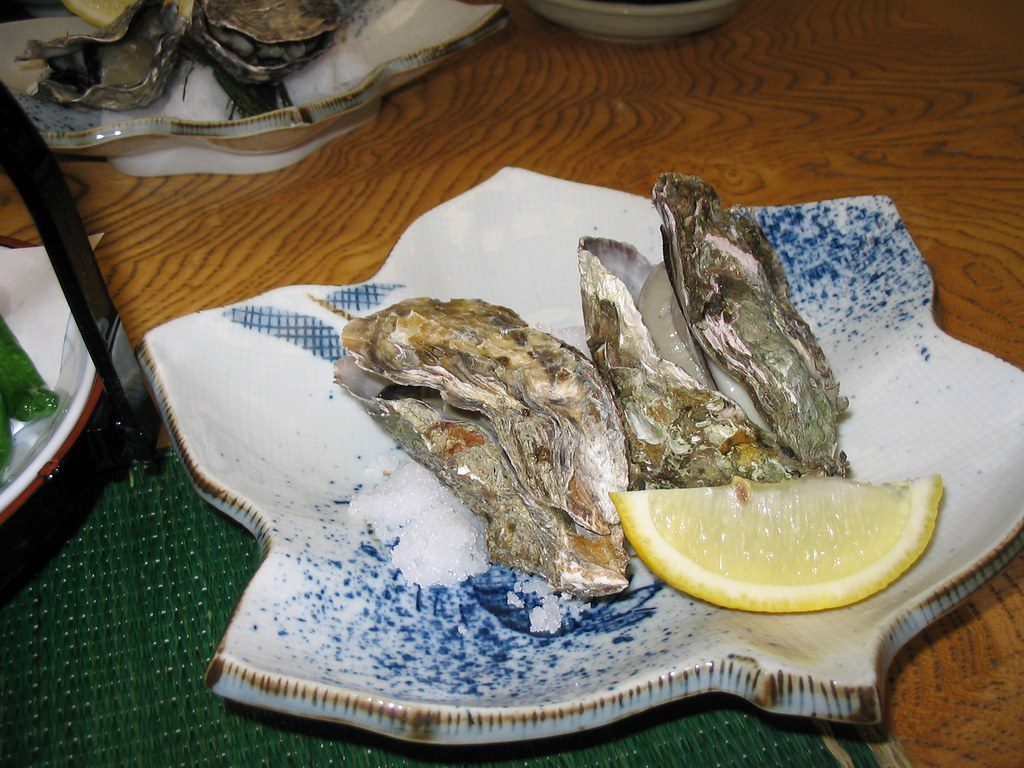
Should You Add Lemon?
Lemon or ponzu, as Japan eats them.
Pairing Guide
The prefecture brews as seriously as it farms.
For kaki fry.
| Optimal | Ponzu with grated daikon |
| Acceptable | Lemon |
| Avoid | Nothing, if you want to taste the sweetness |
Who Is This For?
- Anyone who likes cooked oysters as much as raw
- Visitors to Hiroshima and Miyajima
- Half-shell purists who want a single named farm
- Food in Japan. "Hiroshima Kaki (広島かき)." foodinjapan.org