Basic Profile
Humboldt Bay, on California's far north coast, is the state's second-largest coastal estuary and its largest oyster producer. A study by California Sea Grant and Humboldt State University counted 9.9 million market-size oysters from the bay in 2016.1 Its farms are unusual in what earns them money: not mainly the Pacific oyster, but the Kumamoto, and oyster seed sold to other growers.
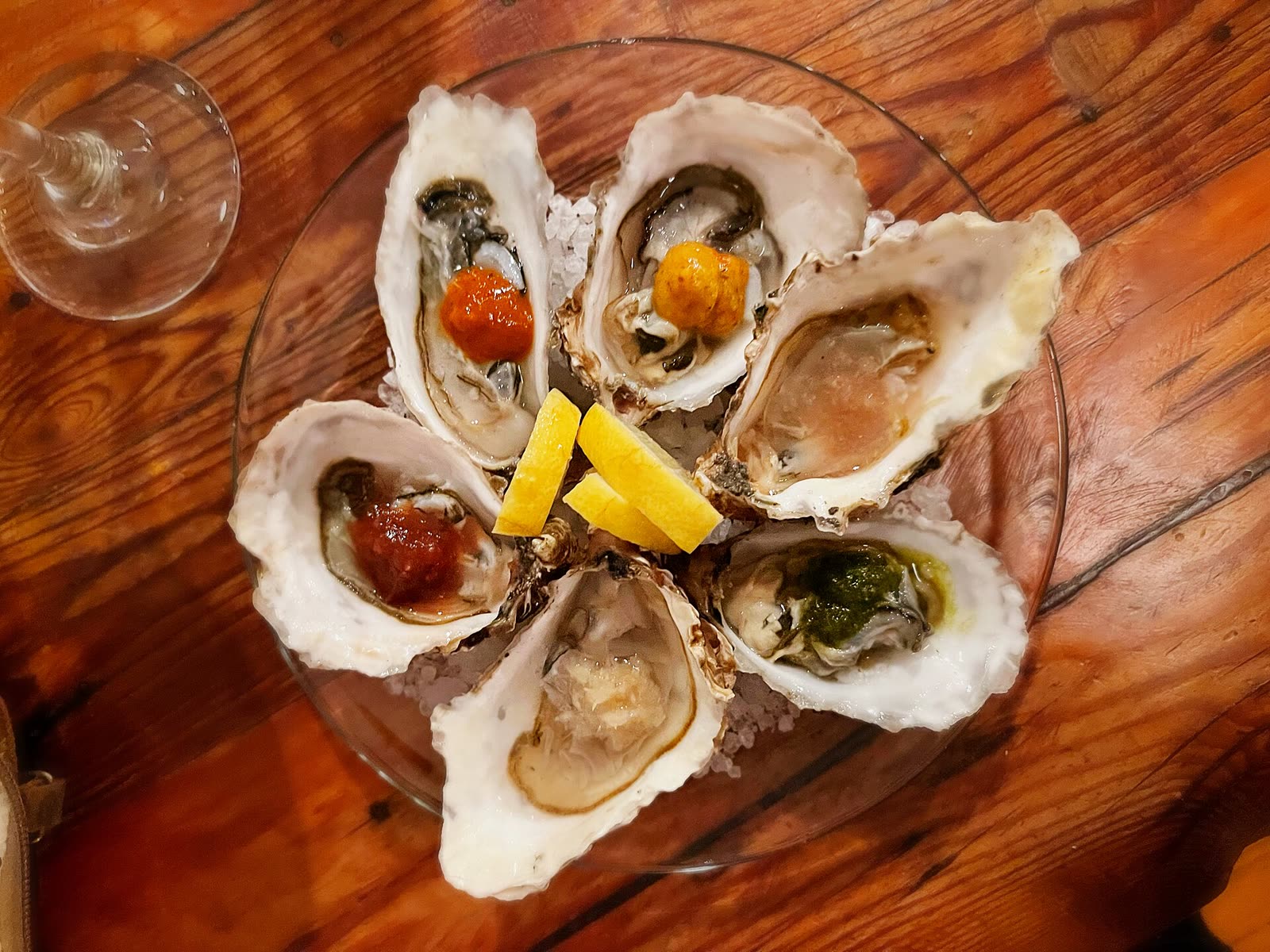

What the Bay Produces
The researchers surveyed the bay's six oyster businesses in 2017, using 2016 data. Oysters brought in $9.8 million in revenue, and the industry's local economic impact came to $19.3 million, with about 100 full-time jobs. The split of that revenue is the surprise. Kumamoto oysters accounted for 62%. Oyster seed, young oysters sold on to other farms, made up 34% of sales. Pacific oysters sold for eating were just 3%.1
Richmond et al., California Sea Grant (2018).1
So a Humboldt Bay oyster on a menu is more likely to be a Kumamoto than a Pacific. If you want the bay's Pacific oyster, ask for it by name. For that oyster, see Kumamoto.
Flavor Breakdown
What Makes Humboldt Bay Unique
Humboldt Bay is California's largest oyster producer, and its money comes from an unexpected place: Kumamotos brought in 62% of oyster revenue in 2016, and seed sold to other farms another 34%. Pacific oysters sold for eating made up just 3%.1 Much of the bay's value leaves as baby oysters that grow up somewhere else.
Should You Add Lemon?
Leave a Kumamoto plain; a Pacific takes a small squeeze.
Pairing Guide
Crisp and bright for a sweet, cold-water oyster.
Good with a small Kumamoto.
| Optimal | Plain |
| Acceptable | Mignonette |
| Avoid | Heavy cocktail sauce |
Who Is This For?
- Kumamoto fans
- Visitors to Arcata and Eureka
- Anyone expecting a large, salty Pacific
- California Sea Grant. "Study: Bivalve business is big for Humboldt Bay," on Richmond, L., Fisher, W., Hackett, S., Smith, W. & Tyburczy, J. (2018), Humboldt Bay Shellfish Mariculture Business. caseagrant.ucsd.edu; full report (PDF)