Basic Profile
The oysters sold in Maine as "Belons" are European flat oysters, Ostrea edulis, the same species as the Belon of Brittany. They are not native. Biologists brought them from the Netherlands in 1949, hoping for an oyster that could support fisheries in water too cold for the native Eastern oyster. Most plantings failed, but one took hold, and the species has since spread along the Maine coast on its own.12
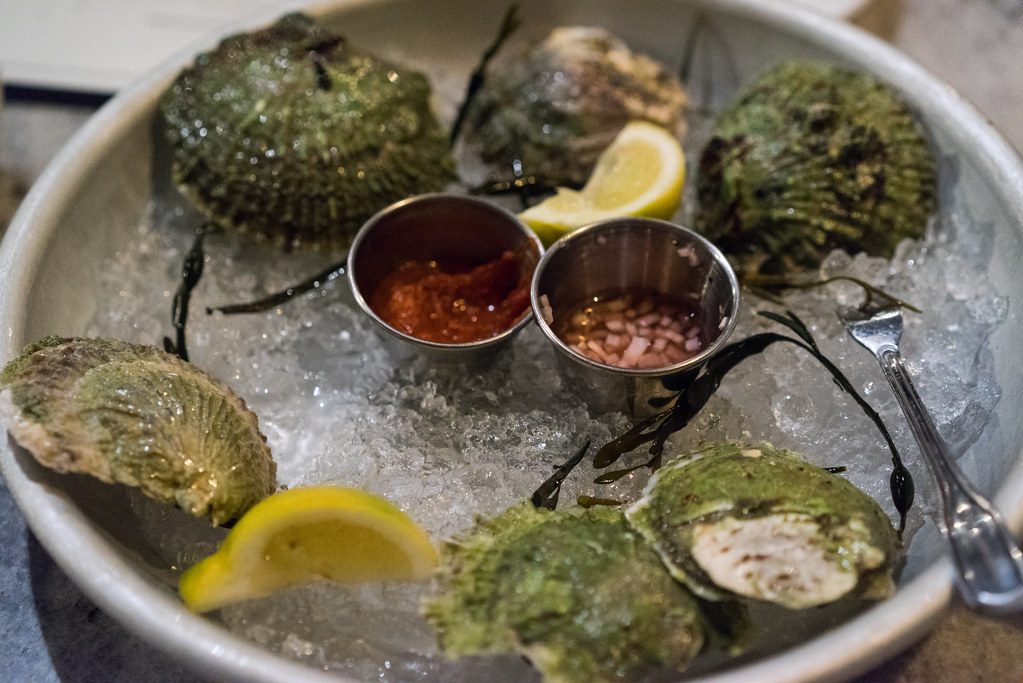
From Zeeland to Boothbay
The seed came from the Eastern Scheldt estuary in Zeeland and was planted in the fall of 1949. The only place it took root was Southport Island, near Boothbay Harbor.1 In 1952 and 1953 the state marine biologist Dana Wallace seeded Harpswell widely, and by 1962 flat oysters were settling naturally from Casco Bay to the Damariscotta River. By 1982 the populations were considered large enough to support a limited commercial fishery, and the species has since been found as far as New Hampshire's Great Bay.12
They have not escaped disease. Maine's flat oysters have suffered die-offs from Bonamia ostreae, the same parasite that devastated flat oysters in Europe.2 The parasite's history is traced in the diseases that redrew the oyster map.
The Fishery Today
Maine's flat oyster fishery is small. In 2024 it landed 21,000 pounds, worth just over $55,000. There are an estimated 15 to 20 commercial harvesters, only two or three of whom dredge from boats, the rest diving; dredges are limited to three feet wide, and the season is closed from June 15 to September 15.1
Flavor Breakdown
What Makes Maine Belon Unique
Maine's "Belons" are European flat oysters, brought from the Netherlands in 1949, they took hold only on Southport Island and then spread along the coast on their own.1 The fishery is tiny, 21,000 pounds in 2024 from 15 to 20 harvesters, most of them divers.1
Should You Add Lemon?
The metallic finish is why you ordered it.
Pairing Guide
Lean enough to let the metal ring.
Chalk against copper.
| Optimal | Plain |
| Acceptable | A few drops of mignonette |
| Avoid | Cocktail sauce |
Who Is This For?
- Flat oyster devotees
- Anyone curious about an accidental American oyster
- First-timers, who may find the metal startling
- Portland Press Herald / The Harpswell Anchor (July 23, 2026). "The other oyster: How an alien shellfish with a strange taste made Harpswell its home." pressherald.com
- Smithsonian Environmental Research Center, NEMESIS. "Ostrea edulis." invasions.si.edu