Basic Profile
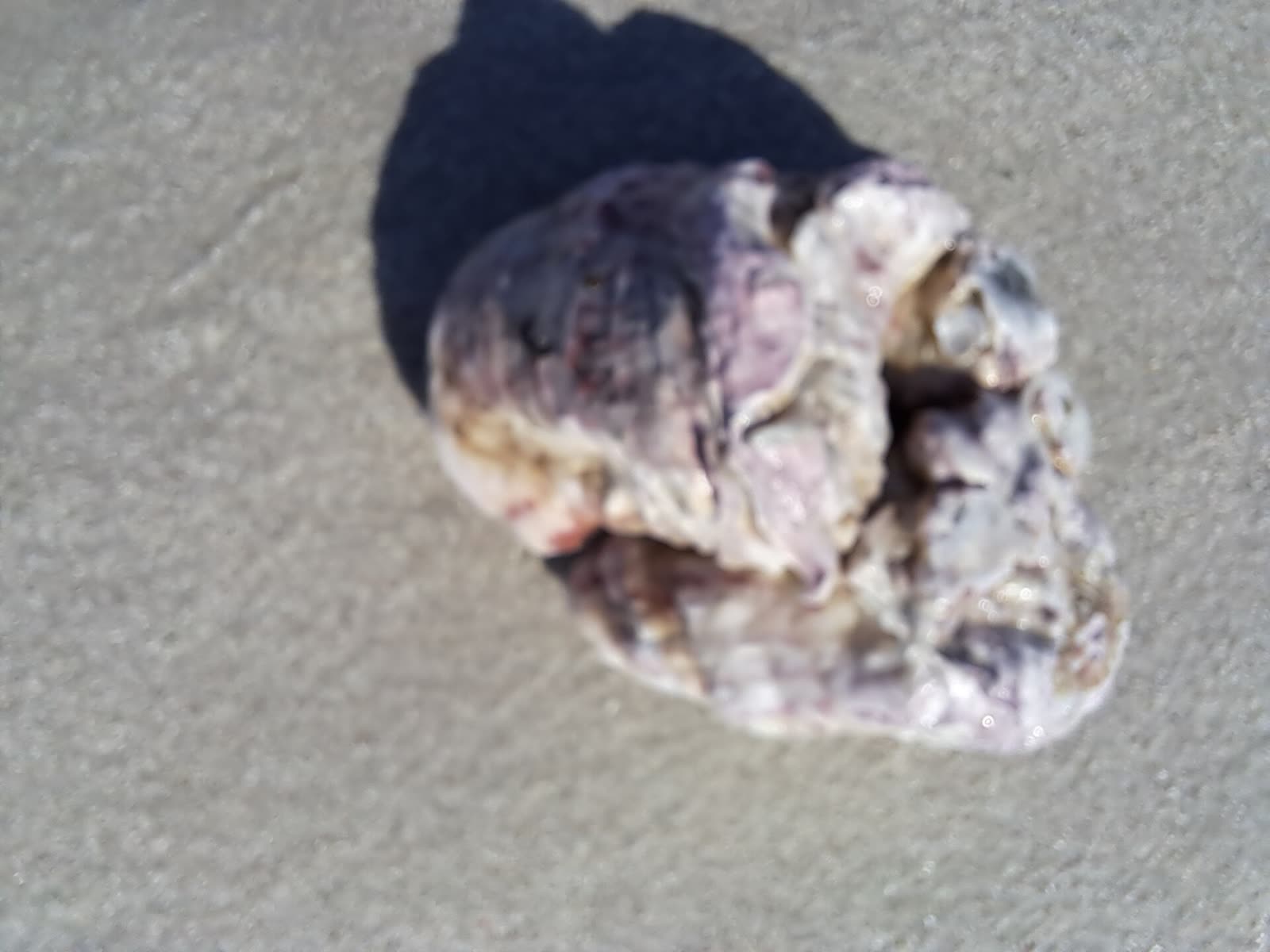
Striostrea margaritacea, the Cape rock oyster, is South Africa's native oyster. It grows wild on rocky reefs from Cape Agulhas east to Mozambique.1 It is slow-growing and heavy-shelled, so South African oyster farms grow the imported Pacific oyster instead.2 Every Cape rock oyster you eat was picked off a rock by hand.

Where It Grows
The Cape rock oyster lives in the intertidal zone, the band of shore that is exposed at low tide and covered at high tide, and down to about 6 meters.1 Its range starts at Cape Agulhas, Africa's southernmost point, and runs east and north along the Indian Ocean coast, where the warm Agulhas Current flows close inshore. It does not grow on the cold Atlantic west coast, where South Africa's oyster farms at Saldanha Bay raise Pacific oysters.2
That makes it a different kind of oyster from almost everything else on this site. It is unselected, unfarmed and shaped entirely by the rock it settled on. No two shells look alike, and no grower controls its food, density or harvest date.
Flavor Breakdown
No published sensory study describes this species. The notes below are general expectations for a wild, heavy-shelled rock oyster from warm-temperate, full-salinity water, not measured results. Wild oysters also vary more from shore to shore than farmed ones.
What Makes Striostrea margaritacea Unique
It is a closely managed wild fishery that few oyster lovers outside South Africa know about. Commercial picking happens mainly along the southern Cape coast and in KwaZulu-Natal. In KwaZulu-Natal, where oysters have been harvested commercially and recreationally for more than a century, the coast is split into management zones that are picked in rotation and then left to recover. A 2009 study modeled the North Coast zones and showed that the rotation improves yields.3 Later work on the east coast has examined how rotational picking affects the size of the oysters left on the rocks.4
Pressure on the resource is real. Picking traditionally happened at spring low tides in the intertidal zone, but it has gradually moved deeper, toward the edge of the subtidal. The Slow Food Ark of Taste, which lists the Cape rock oyster as a food at risk, reports illegal diving on deeper beds, and warns that over-harvesting and pollution near major ports are stripping oysters from the southern Cape's intertidal zone.1
Should You Add Lemon?
Wild oysters vary from shore to shore. Taste the first one plain to see how much brine you are dealing with, then decide.
Pairing Guide
The regional match. Its acidity cuts the brine, and it is what you are most likely to find poured beside local oysters on the coast.
For raw oysters. Bottle-fermented sparkling wine brings the same lees-derived savoriness that makes Champagne work with oysters.
For smoked or fried rock oysters, where the carbonation clears the palate between bites.
| Optimal | Plain, to judge the brine; smoked or fried for the larger specimens |
| Acceptable | Light lemon; a classic mignonette |
| Avoid | Heavy sauces that bury a rarely available oyster |
Who Is This For?
- Travelers on South Africa's southern and east coasts
- Anyone curious about a wild, unfarmed oyster
- Tasters building a comparison of native oyster species
- Anyone outside South Africa, since it is essentially unavailable abroad
- Diners who want a predictable, uniform farmed oyster
- Anyone unable to confirm a licensed source
History, Lore & Market Record
Deep history: People have eaten shellfish on this coast for a very long time. At Pinnacle Point near Mossel Bay, within the Cape rock oyster's range, archaeologists found evidence of shellfish eating dating to about 164,000 years ago, among the earliest known anywhere.5 Shell middens more than 2,000 years old along the coast record the Khoi people eating oysters.1
A century of commercial picking: In KwaZulu-Natal, oysters have been harvested commercially and recreationally for more than a hundred years. Early on, the fishery adopted rotational harvesting, and it still uses a zoned rotation today.3
Why it is not farmed: South Africa brought in the Pacific oyster, Crassostrea gigas, for farming in the Knysna estuary in the 1950s. It remains the only oyster species farmed commercially in the country.2 Attempts to farm the Cape rock oyster have run into the same problem each time: it grows slowly and builds a heavy shell.1
- Slow Food Foundation for Biodiversity. "Cape Rock Wild Oyster." Ark of Taste. fondazioneslowfood.com
- Anchor Environmental Consultants, for the Department of Agriculture, Forestry and Fisheries. "Pacific Oyster Crassostrea gigas": Biodiversity Risk and Benefit Assessment. anchorenvironmental.co.za (PDF); see also Haupt, Griffiths, Robinson, Tonin & De Bruyn (2010). The history and status of oyster exploitation and culture in South Africa. Journal of Shellfish Research, 29(1), 151–159. doi.org/10.2983/035.029.0109
- de Bruyn, P.A., Moloney, C.L. & Schleyer, M.H. (2009). Application of age-structured production models to assess oyster Striostrea margaritacea populations managed by rotational harvesting in KwaZulu-Natal, South Africa. ICES Journal of Marine Science, 66(2), 408–419. doi.org/10.1093/icesjms/fsn192
- Steyn et al. (2023). Effect of rotational harvesting on the size composition of Cape rock oysters Striostrea margaritacea on the east coast of South Africa. African Journal of Marine Science, 45(4), 249–258. doi.org/10.2989/1814232X.2023.2258936
- Marean, C.W. et al. (2007). Early human use of marine resources and pigment in South Africa during the Middle Pleistocene. Nature, 449, 905–908. doi.org/10.1038/nature06204