Basic Profile
South Korea is the world's second-largest oyster producer after China, and about 80% of its oysters grow in the waters around Tongyeong, a port on the country's southern coast.1 The farms are so extensive that NASA's Landsat 8 satellite photographed them from orbit in November 2019, the bays striped with lines of buoys.1

Hanging Culture
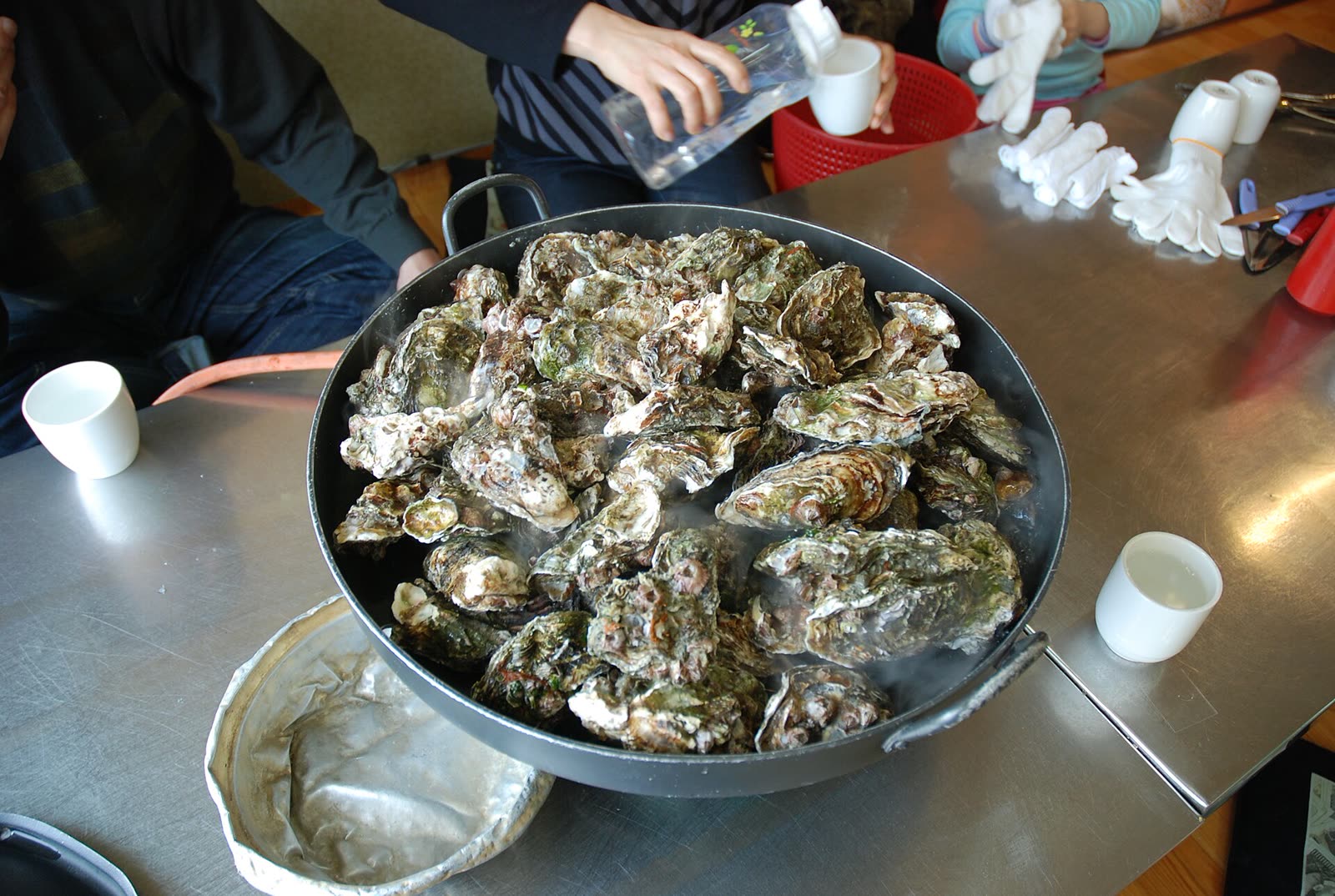
Tongyeong's oysters are grown by hanging them from ropes or wires held near the surface by buoys, a method that promotes fast growth and stronger shells.1 The method was adopted on Korea's southern coast in the 1960s.2 Harvest starts in autumn. In 2019 yields were unusually large, which NASA linked to summer downpours that washed extra nutrients into the water.1
The scale has a cost. Research has found high concentrations of styrofoam debris and microplastics on the area's beaches, much of it from the buoys used in the farms.1 What that means for the oysters is covered in oysters and microplastics.
Exports and Food Safety
Tongyeong ships oysters to the United States, Japan, Canada, Hong Kong and the European Union.1 That trade has had setbacks. On May 1, 2012, the US Food and Drug Administration removed all Korean shellfish shippers from its Interstate Certified Shellfish Shippers List and urged retailers to pull Korean oysters, clams, mussels and scallops, finding inadequate sanitary controls, poor management of land-based pollution and norovirus in growing areas.3 Korean shippers now appear on the list again under a shellfish sanitation arrangement with the Korean government.4 The sanitation rules behind it are explained in why rain and sewage close oyster beds.
Flavor Breakdown
What Makes Tongyeong Unique
Tongyeong grows about 80% of South Korea's oysters, on buoy lines dense enough to be photographed from orbit.1 It is oyster farming at industrial scale, with the costs that come with it: styrofoam and microplastic on the beaches, and a 2012 FDA decision to drop every Korean shipper from its certified list, since reversed.13
Should You Add Lemon?
Lemon is fine; chogochujang is better.
Pairing Guide
The Korean table's own drinks.
A little sweetness for the chili paste.
| Optimal | Chogochujang |
| Acceptable | Lemon |
| Avoid | Nothing, if you want the oyster alone |
Who Is This For?
- Fans of Korean food
- Anyone curious about oyster farming at scale
- Half-shell purists looking for a named single farm
- NASA Earth Observatory. "The Oysters of Tongyeong." science.nasa.gov
- Korean Culture and Information Service. Webzine Korea, November 2023, "Local Dining." korean-culture.org
- California Grocers Association. "FDA Urges Removal of Select Korean Seafood." cagrocers.com
- US Food and Drug Administration. "Interstate Certified Shellfish Shippers List." fda.gov