Basic Profile
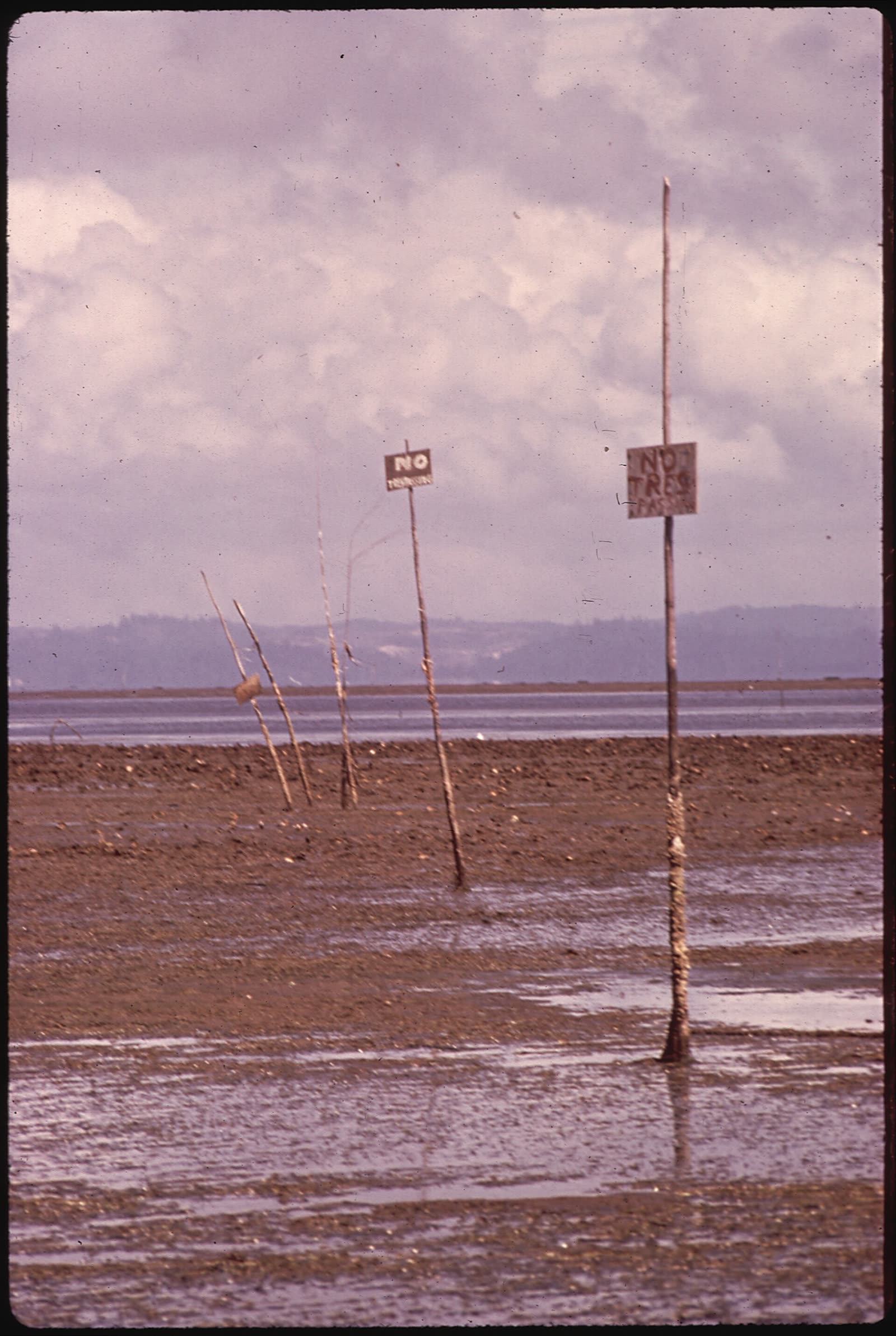
Willapa Bay, in the southwest corner of Washington, is the state's oyster heartland. It typically accounts for about 70% of Washington's oysters.1 Its history runs from the gold rush to the arrival of the Japanese oyster, and most Willapa oysters are still grown the old way, on the bay's wide tideflats.

From the Gold Rush to Japan
Washington's oyster trade began here, when the bay was called Shoalwater Bay. The first shipload of native Olympia oysters reportedly went to San Francisco in 1851. A basket that cost $1 at the bay could fetch $30 in San Francisco's wholesale markets, and one captain made 74 voyages between the two between 1875 and 1880. By the late 1800s the native oysters were declining from overharvest and pulp mill effluent.2
Growers tried replacements. Eastern oyster seed arrived in 1896, but it did not reproduce in the cold water and died off in the late 1910s. In 1919 the first shipment of Pacific oyster seed from Japan arrived for the Pearl Oyster Company, run by J. Emy Tsukimoto and Joe Miyagi. Most of it died on the way, but spat survived on the shells, and by 1923 the industry was commercially active. The new oysters, as one grower's grandson put it, "grew like weeds".2
Shrimp, Soft Mud and a Pesticide Fight
Willapa's tideflats have a native problem: burrowing shrimp. When their numbers boom, the mud turns so soft that farmed oysters sink, smother and die. From the 1960s through 2013 growers sprayed the beds with the pesticide carbaryl. Their request to use a replacement, imidacloprid, was finally denied by Washington's Department of Ecology in 2018, and a 2019 settlement set up an integrated pest management group instead.3 The problem remains a live issue for the bay's farms.
Flavor Breakdown
What Makes Willapa Bay Unique
Willapa grows about 70% of Washington's oysters, most of them still the old way, spread on the tideflats.1 It is also where the Pacific oyster got its American start: the first Japanese seed arrived here in 1919, and it "grew like weeds".2 The bay's recurring enemy is a native one, burrowing shrimp that soften the mud until oysters sink.3
Should You Add Lemon?
A big tideflat oyster takes lemon well.
Pairing Guide
Bright and local.
For a platter or a pan roast.
| Optimal | Lemon |
| Acceptable | Mignonette |
| Avoid | Nothing heavier than cocktail sauce |
Who Is This For?
- Anyone interested in West Coast oyster history
- Diners who want the bay behind most of Washington's oysters
- Anyone looking for a small, tumbled half-shell oyster
- Chinook Observer (May 21, 2021). "NMFS: 24% drop in state oyster production 2019–2009." chinookobserver.com
- Nims, C. (August 11, 2020). "Oyster Farming in Washington, Part 1." HistoryLink.org Essay 21070. historylink.org
- Washington State Department of Ecology. "Burrowing shrimp control: Imidacloprid." ecology.wa.gov