Basic Profile
In Goa the oyster is calvam in Konkani. Women gather hooded oysters at low tide, chipping them from exposed rock with sickles. Men paddle out in canoes with long bamboo poles into deeper creeks and dive to sift the bottom for the larger brackish-water oyster. The marine scientist Aaron Savio Lobo recorded the practice in 2020 at Nerul creek and in Sancoale and Chicalim bays on the Zuari.1
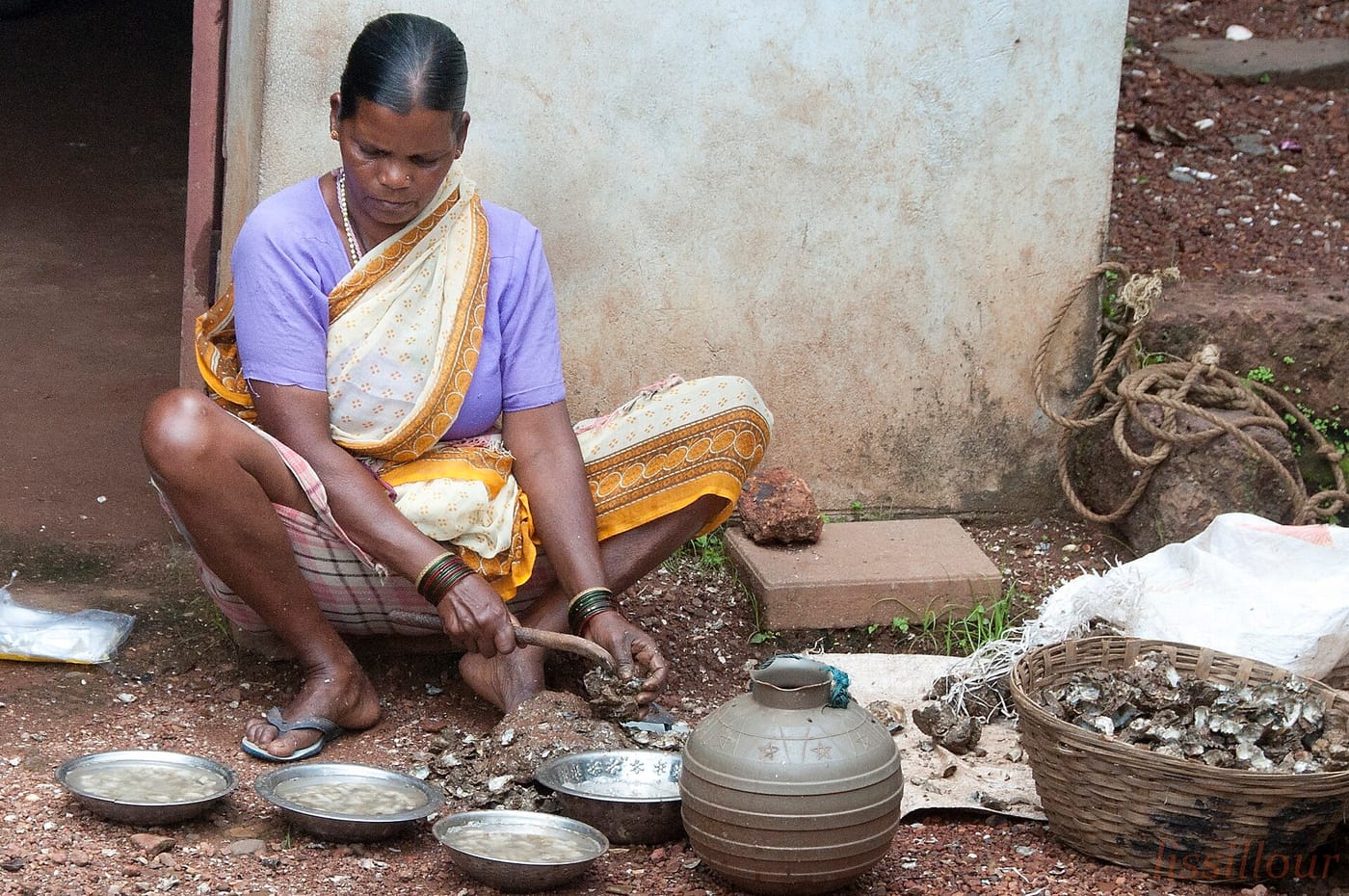
.jpg)
The Unwritten Rules
The rule that matters most concerns the shells. The big old shells that young oysters settle on are called calvam hadde, mother shells, and they are returned to the water after the meat is taken. Divers check their catch by tapping each shell on the side of the canoe: a hollow sound means a dead one.1 The same logic, shell as the foundation of the next crop, is behind modern shell recycling.
The pressures are recent. Tourist demand encourages over-harvesting, old iron-ore barges decay in the estuaries, and during the 2020 lockdown people stripped wide stretches of tidal flat.1
Flavor Breakdown
What Makes Goa Unique
It is a fishery run on custom instead of licences, with a conservation rule built into the vocabulary. The species is described in the hooded oyster profile.1
Should You Add Lemon?
Lime, in Goa, and it goes into the pan.
Pairing Guide
For a plate of fried oysters in the heat.
The local spirit, diluted.
| Optimal | Lime and green chilli |
| Acceptable | Coriander and onion |
| Avoid | Nothing creamy |
Who Is This For?
- Travelers who eat where the locals do
- Anyone interested in customary fisheries
- People who want a raw half-shell oyster
- Lobo, A. S. (8 June 2020). "The Unwritten Rules of Oyster Fishing." Goya. goya.in