Basic Profile
Isigny-sur-Mer is better known for its butter and cream, but the bay beside it is one of Normandy's great oyster grounds. The Baie des Veys is a wide estuary where four rivers from the Cotentin and Bessin marshes, the Douve, the Taute, the Vire and the Aure, flow into the Channel, between the D-Day beaches of Utah and Omaha.12
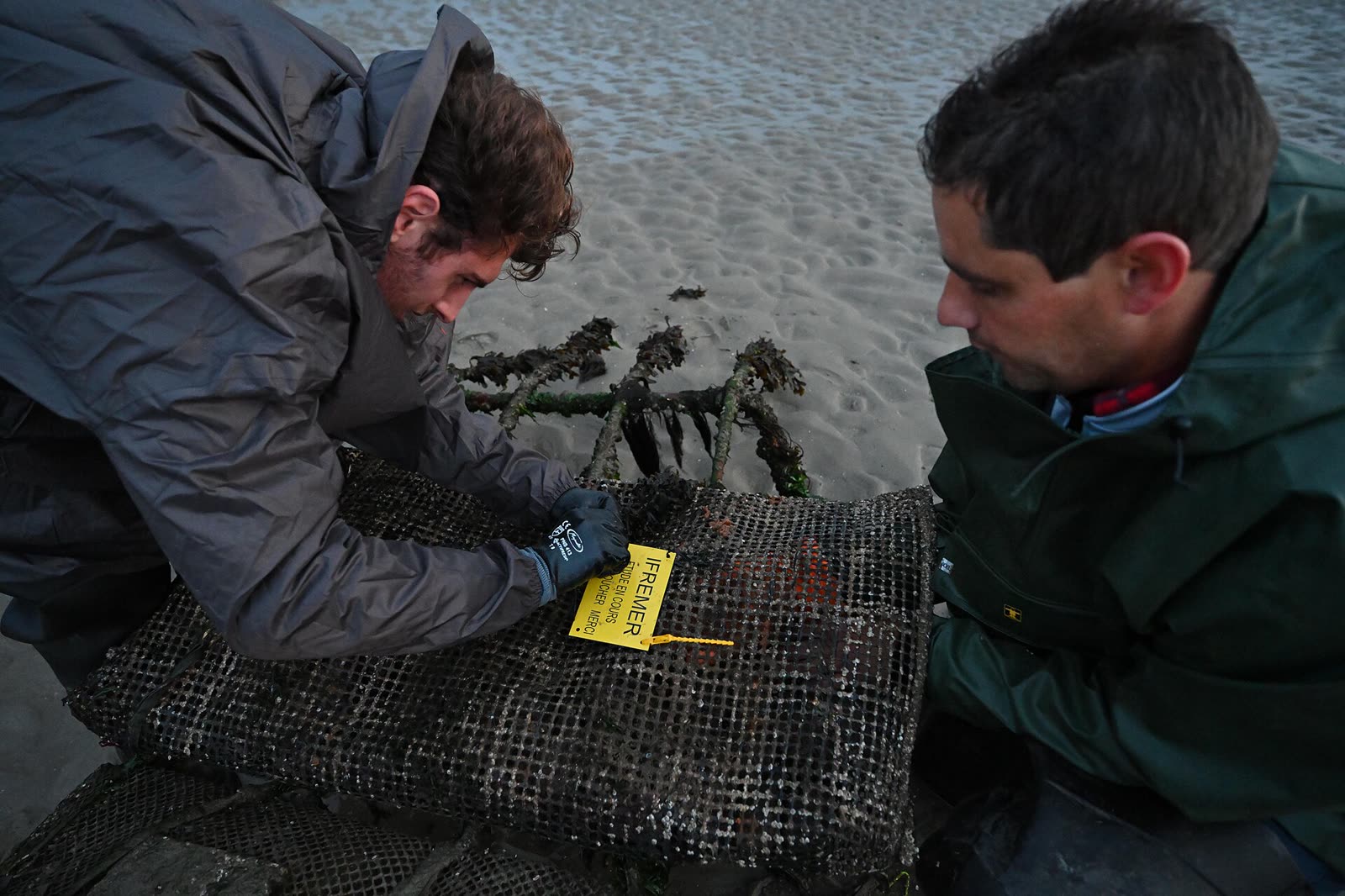
.jpg)
The Bay
At low tide the bay is a sandy expanse of 7 square kilometers (about 2.7 square miles), and boats can only enter at high tide by two marked channels.1 Its oyster tables cover an area the regional tourist board compares to 340 soccer fields, and the bay produces up to 10,000 metric tons of oysters a year, about 30% of Normandy's output.12 An oyster takes about three years to mature here, and each is turned and moved at least thirteen times along the way.2
The shelter and the constant river water are credited with the oyster's "fleshy character", which is why growers sell it as the spéciale d'Isigny.1 Since 2023, Normandy's cupped oysters have been protected by the PGI "Huître de Normandie". The French grades, spéciale among them, are decoded in size numbers explained.
Flavor Breakdown
What Makes Isigny Unique
Four rivers from the Cotentin and Bessin marshes pour into the Baie des Veys, between Utah and Omaha beaches, and that river water is what growers credit for the Isigny oyster's fleshiness.1 Each oyster is turned and moved at least thirteen times over about three years.2 It is a salty oyster with unusually full meat, from a town better known for its butter.
Should You Add Lemon?
Try the second liquor plain before reaching for lemon.
Pairing Guide
The local pour, tart enough for the brine.
The classic French whites for a salty oyster.
| Optimal | Plain |
| Acceptable | Shallot mignonette |
| Avoid | Cocktail sauce |
Who Is This For?
- Visitors to the D-Day beaches
- Fans of meaty, salty oysters
- Anyone who wants a soft, low-salt oyster
- Maison Taillepied. "The Bessin: the oysters of Normandy and the Baie des Veys." huitres-taillepied.fr
- Normandy Tourism. "Oyster farm tasting tour, Baie des Veys." normandie-tourisme.fr