Basic Profile
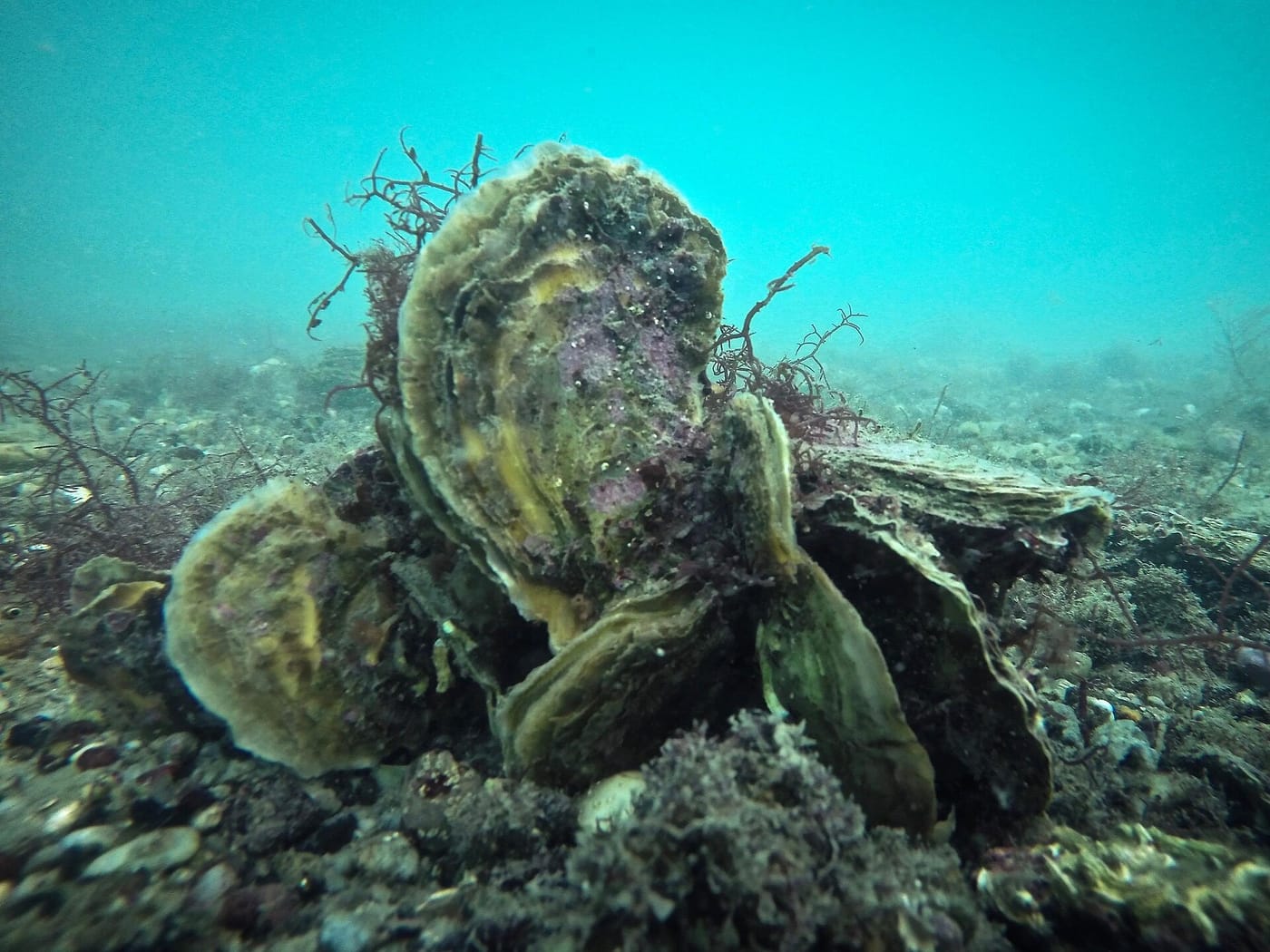
A large natural bed of flat oysters once ran from Saint-Pierre-Quiberon to Carnac. It was dredged, and then farmed. In 1861 Princess Bacciochi, a relative of Napoleon I, obtained the first big concession, 4,000 metres long and 800 wide, to breed oysters instead of dredging them.1

Into Deep Water
The wild bed was officially classified in 1912 and declassified in 1949, because too few oysters were left. That year the first deep-water concessions were granted. Meanwhile spat collecting on tiles grew at Plouharnel, from 9 hectares of parks in 1930 to 71 by 1965, and later moved to mussel shells hung in nets and then to limed plastic cups.1
Two parasites then hit the species. Marteilia destroyed the river beds in 1974, and bonamia reached the deep-water oysters in 1981.1 The same history played out at the Belon.
What Is Left
The growers' own site puts annual production at about 2,000 tonnes of flat oysters against 80,000 of cupped ones, and says 80% of Quiberon's flats are sent on to the Bay of Mont-Saint-Michel, home of Cancale.1
The only other wild flat oysters left on this coast are in the Rade de Brest. A two-year project there, REHPAR, began in 2024 to rebuild a bed inside a protected Natura 2000 site, starting with a pilot of 200 square metres. It is run by the regional shellfish committee for northern Brittany, the research institute Ifremer and the Armorique regional park.2
Flavor Breakdown
What Makes Quiberon Unique
Quiberon is where French flat oysters start. Spat is still caught from the bay itself, and oysters born here are finished and sold under other names.1
Should You Add Lemon?
Lemon cuts off the finish. Eat it plain, or with buttered rye bread on the side.
Pairing Guide
Lean, salty and local to the same coast.
Its mineral edge lines up with the oyster's.
| Optimal | Plain |
| Acceptable | Buttered rye bread alongside |
| Avoid | Vinegar and shallot |
Who Is This For?
- Flat oyster devotees
- Anyone who likes a metallic, lingering finish
- First-time oyster eaters
- L'huître plate du Morbihan. "La baie de Quiberon." huitre-plate.fr
- Parc naturel régional d'Armorique. "REHPAR, un projet partenarial en faveur de la restauration de l'huître originelle des côtes bretonnes." pnr-armorique.fr