Basic Profile
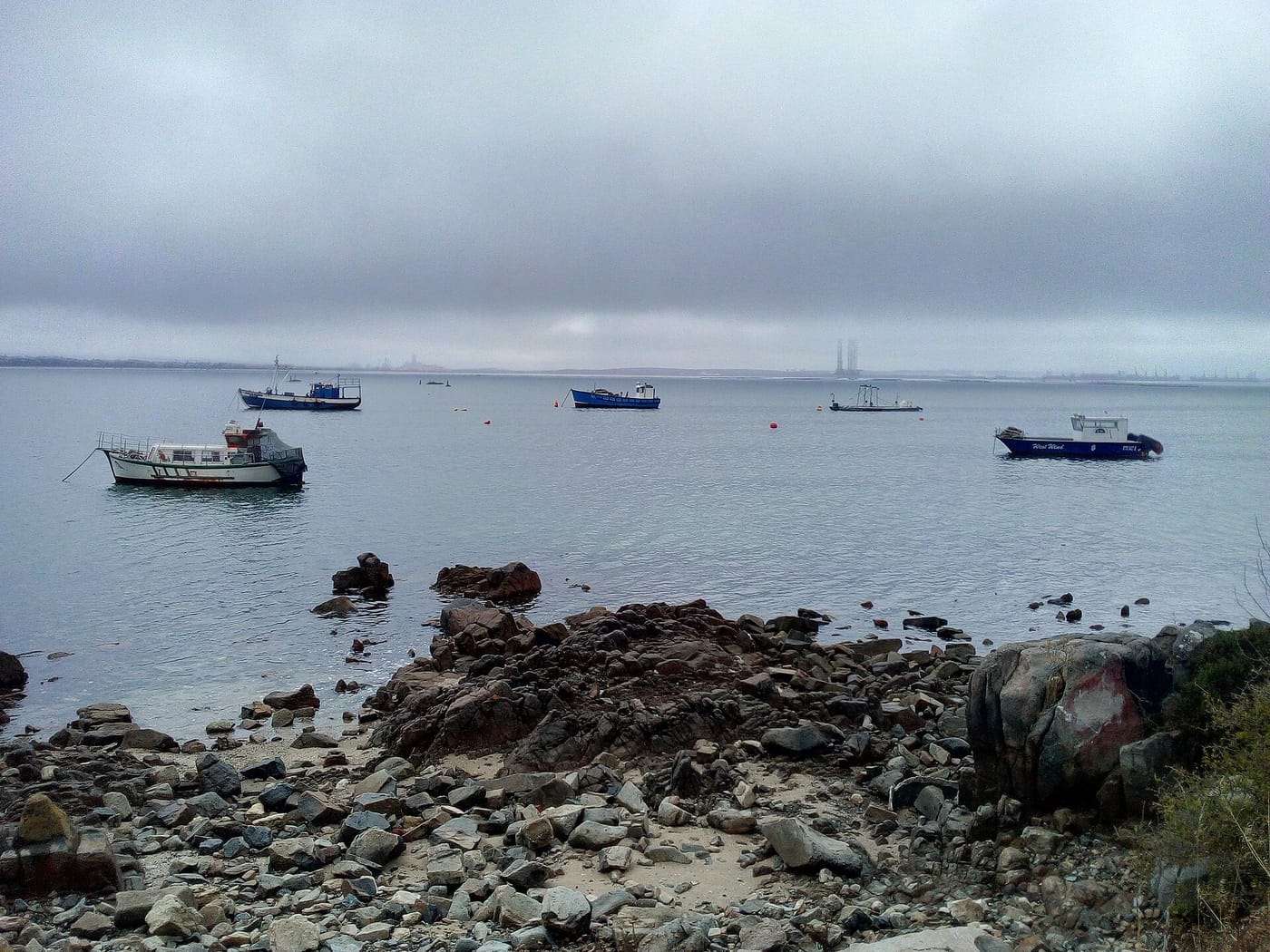
Antonio Tonin set up the Saldanha Bay Oyster Company in 2005. By 2016 it was the biggest oyster farming operation in South Africa, with 40 employees, two factories and two boats. The whole country produces about 500 tons of oysters a year, against 160,000 in France.1

Seed From Chile
The spat comes from a hatchery in Chile, chosen because it produces what Tonin calls "a good, hardy, generalist spat" with no genetic modification, which the farm needs for its organic certification. Sue Tonin, who has a doctorate in marine biology, manages the nursery. Seed starts in tanks on land at about 10 millimetres, moves to stacked mesh baskets hung from ropes on a sheltered 10-hectare nursery site, and finishes on a 25-hectare farm in the outer bay.1
Growth is quick. A cocktail oyster of 40 to 50 grams is ready in 8 to 10 months, a medium in 10 to 12, and the largest grade, up to 150 grams, in 18 to 20. Half the crop is exported, to Hong Kong, China and Taiwan.1
Flavor Breakdown
What Makes Saldanha Bay Unique
It is the country's largest oyster farm, raised on Chilean seed in an upwelling bay on the Atlantic side of South Africa.1
Should You Add Lemon?
Takes lemon and black pepper, the South African habit.
Pairing Guide
Cool-coast acid.
More body, for the larger grades.
| Optimal | Lemon and black pepper |
| Acceptable | Tabasco |
| Avoid | Heavy sauces on the small ones |
Who Is This For?
- Anyone eating oysters in Cape Town or up the West Coast
- People who like choosing by size
- Those looking for a wild South African oyster
- Farmer's Weekly (16 March 2016). "Oyster farming in Saldanha Bay." farmersweekly.co.za