Basic Profile
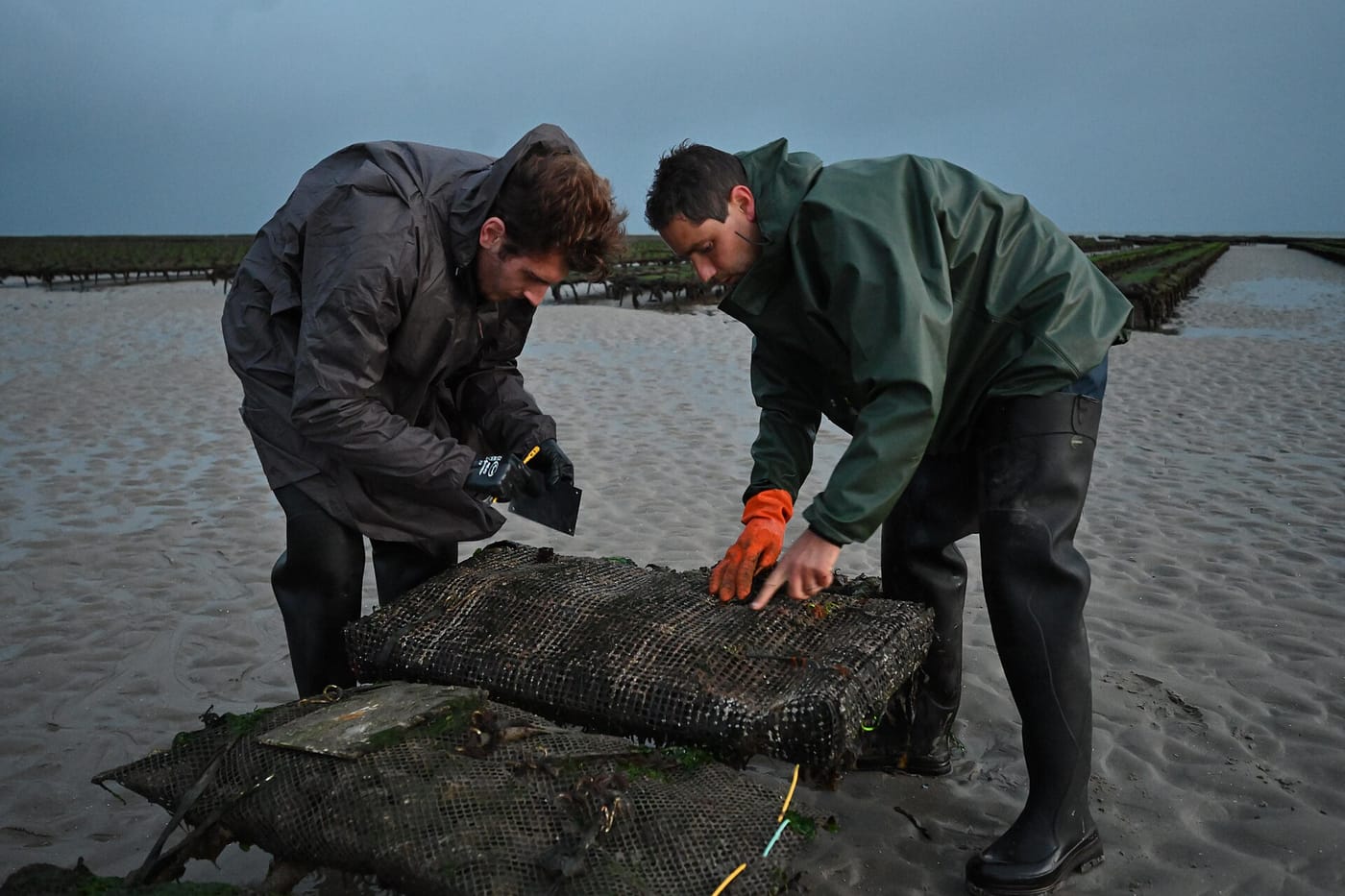
The oyster parks at Utah Beach sit on the sand where American troops landed in June 1944. The Manche department counts this shore, with the neighboring Baie des Veys, as one of its three oyster crus, and harvests 15,200 tonnes of oysters a year across all three.1
.jpg)
Three Crus, One Department
The Manche's tourism board describes them in turn. The west coast, from Granville to Portbail, gives a very iodine-heavy oyster shaped by offshore wind and strong currents. Saint-Vaast-la-Hougue, the oldest natural bed in the department, gives a generous oyster with a hazelnut note. Utah Beach and the Baie des Veys give flesh that is "plus douce et croquante", softer in taste and crunchier, and suited to cooking.1
Oyster farming here dates to 1880. Oysters were first grown flat on the ground, and raised pockets came in from 1960.1 The neighboring bay is covered in the Isigny profile.
A Family on the Dune
Hamel & Fils, at La Dune in Sainte-Marie-du-Mont, is in its fourth generation: Pascal Hamel works with his three sons, Benjamin, Adrien and Romain. The house sells Spéciales d'Utah Beach and bouchot mussels across Europe and at its own shop, Aux Viviers d'Utah Beach.2
Flavor Breakdown
What Makes Utah Beach Unique
It is the Normandy oyster that leads with sweetness and texture instead of iodine, grown on a beach better known for 6 June 1944.1 Normandy oysters carry a protected geographical indication.1
Should You Add Lemon?
A little. The sweetness is the point, and too much acid flattens it.
Pairing Guide
Lean and saline, the standard French answer.
Local, and its apple edge suits a sweet oyster.
| Optimal | Plain |
| Acceptable | Lemon or shallot vinegar |
| Avoid | Anything sweet |
Who Is This For?
- People who like a meaty spéciale
- Visitors to the landing beaches
- Lovers of sharp, iodine-led oysters, who should look to the west coast
- Attitude Manche. "Les huîtres, l'un des emblèmes de la Manche." attitude-manche.fr
- Hamel & Fils. "L'entreprise." huitreshameletfils.fr